The Lawyer Who Taught the Nation’s Biggest Museums to Listen to Native Americans
For years, these cultural institutions excluded Indigenous peoples. Under leaders like Rick West, Native Americans gained more influence. The archives he recently donated to the Autry trace over 50 years of advocacy for Native representation.

For decades, museums refused to call Native American creations what they were: art.
Instead, terms such as “visual ethnography” were used to describe these works — “in other words, not art but something else,” recalled W. Richard “Rick” West Jr.
Growing up with an artist father, a member of Oklahoma’s Cheyenne and Arapaho Tribes, West knew all too well how the nation’s cultural institutions marginalized Indigenous artists.
“My dad belonged to a generation that probably fought for years to get off the walls of natural history museums,” said West, whose father was born in 1912. “He was in that generation that really began convincing people that, yes, they are creating art, which can satisfy any number of aesthetic goals.”
Thanks to the efforts of artists like his late father, the nation’s most prestigious cultural institutions — the Metropolitan Museum of Art and the Whitney Museum of American Art — today feature prominent exhibitions by Native Americans.
West himself, however, also played a key role in initiating that shift. In 1971, he earned a law degree from Stanford University, using his legal skills to advocate for Native Americans. Nearly 20 years later, his career took an unexpected turn: He became founding director of the Smithsonian Institution’s National Museum of the American Indian (NMAI) in Washington, D.C. He then led the Autry Museum of the American West in Los Angeles until his retirement in 2021.
As a museum leader, West not only challenged how cultural institutions represented Native Americans but also used his legal training to repatriate sacred items — from burial objects to actual human remains — to their tribes of origin.
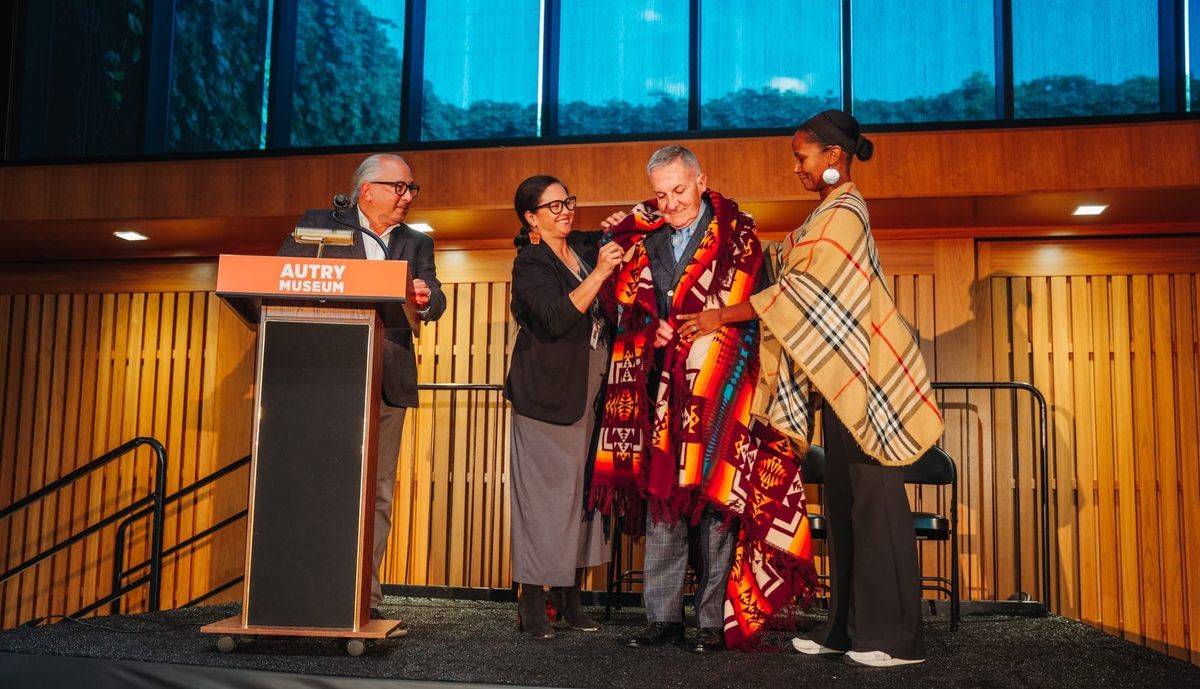
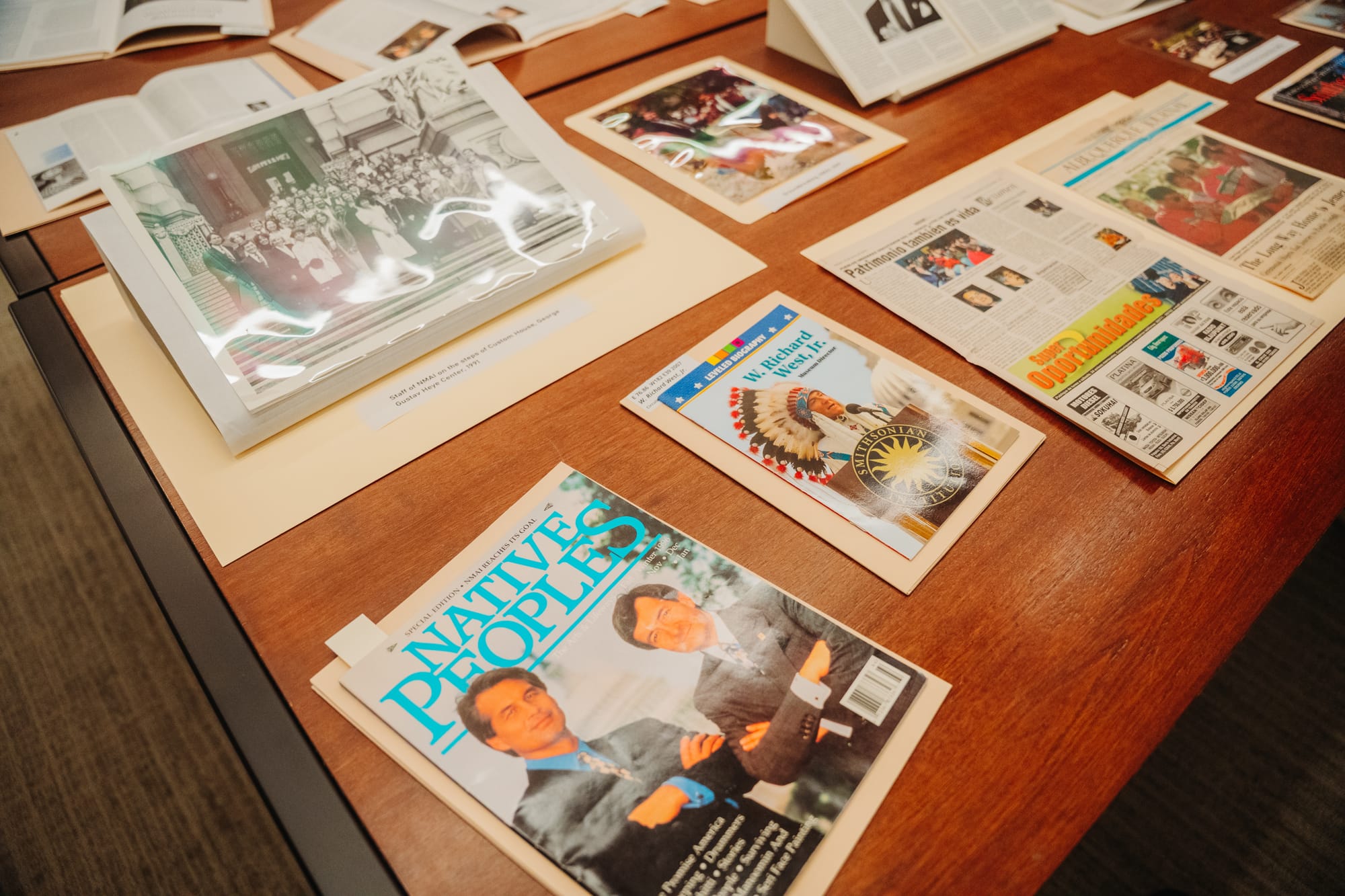
Now 83, West recently gifted the Autry with his archives spanning a combined five decades in the legal and museum fields advocating for Native American rights and representation. The collection includes 100 boxes with thousands of documents and correspondence, along with roughly 100 photographs, over 300 digital files and about 500 publications, according to the Autry.
Sorting through his papers, which total 44 linear feet, West encountered hundreds of speeches and articles he wrote as well as newspaper clippings and video recordings of the museums he led.
“Nothing really surprised me in terms of the substance of what I saw, but I was just kind of surprised at the abundance of it,” West said.
On Nov. 13, the Autry kicked off the 2026 Marshall McKay Seminar for Empowering Native Knowledge. The two-day event focused on what West’s archives reveal about his work to reshape Indian Country and decolonize museums.
“There are plenty of matters in the archives that occupied the attention of Rick West and could occupy the attention of future biographers and historians,” said Stephen Aron, president and CEO of the Autry, in a statement to The Fault Line News. “In the Autry, West saw an institution ripe for third-way transformation.”
Still, West wants to be clear that the archives do not represent a personal celebration of him.
“I participated in it, but it was a series of institutional changes,” he said. “This was more an institutional biography of museums and what they do with Native collections and communities.”

Lori Lea Pourier is not sure that Rick West would use the word “activist” to describe himself. But his work amounted to nothing less, according to Pourier, who is Oglala Lakota and first met him almost 50 years ago. At the time, she was a high school student and her mother was development director for Native American Rights Fund, a nonprofit legal organization.
“The world lens he operated from is, no matter what sector you're in in Indian Country, you have to understand our relationship with this federal government because we are nations within a nation,” said Pourier, founder and senior fellow of First Peoples Fund, which supports Indigenous artists and is based in Rapid City, South Dakota. “If you don't understand that history of how colonization came to be in this country, you're not really telling a full story through the arts and culture lens or the museum lens. Rick brought that into all of his work.”
West excelled as a museum director because he understood both federal law and Indigenous cultures, languages and ceremonies, Pourier said.
That wasn’t the only way he stood out. When he became founding director of NMAI, most museum heads came from curatorial backgrounds. He did not, arriving at his decisions differently as a result.
Because he solicited the opinions of Native Americans, he drew criticism, according to Patsy Phillips, who led the IAIA Museum of Contemporary Native Arts in Santa Fe, New Mexico, for 18 years before retiring this past summer.
“When they curated the new museum on the Mall, they used voices from Native America across the hemisphere,” said Phillips, a citizen of the Cherokee Nation of Oklahoma. “They brought in community curators who curated their own sections of these exhibitions. That was new. Generally speaking, museums never sought out Natives or consulted with Natives.”
Traditionalists balked at the idea of inviting community members into the curatorial process instead of giving authority to scholars alone. West recognizes how radical a shift it was “to elevate the first-person voice of Native peoples themselves in interpreting and representing things in the collection,” he said.
He began his tenure at NMAI with the goal of protecting the cultural sovereignty of Native Americans just as he had protected their legal and constitutional sovereignty in the decades prior as a lawyer for global law firm Fried, Frank, Harris, Shriver & Jacobson, where he advocated for clients in tribal, state and federal courts. By the late 1980s, he had moved on to Native-owned firm Gover, Stetson, Williams & West in Albuquerque, New Mexico.
Subscribe to The Fault Line News
As a lawyer, he was accustomed to coming to work in suits every day. But as a new museum director, he found himself under scrutiny when a major newspaper praised his style — he has a knack for mixing patterns, colors and textures — and disparaged the apparel of other museum staff.
His father offered reassurance: “Just remember one thing — not only were the Cheyennes the Spartans of the Plains, they were also the peacocks of the Plains,” West recalled. “With that, I felt that anything I wanted to do in the way of dressing was OK, that it was culturally connected.”
“Just remember one thing — not only were the Cheyennes the Spartans of the Plains, they were also the peacocks of the Plains.”
As NMAI’s leader, West operated from the premise that Indigenous peoples are the ultimate authorities on their own heritage. He insisted that the institution and, later, the Autry prioritize tribal knowledge.
“So that kind of changed the whole arc of curation and interpretation in museums,” he said.
Before long, even museums that were not ethnic-specific, such as the National Museum of American History, determined that they should involve Native Americans in the collections pertaining to their communities. But West didn’t usher in this transition alone. The support of NMAI personnel, including the board of trustees, which had a Native American majority, helped achieve this mission.
NMAI directed attention to Indigenous peoples and trained them to enter the museum field, said Phillips, who worked on major exhibitions there during her tenure from 2000 to 2008.
"Natives never headed up Native collections,” she said. “So that's the other thing — we all trained there in different ways. What has given weight is that there is a national museum, and that's been really powerful. With that, other museums cannot ignore Natives anymore. They can't say, ‘Well, they're all dead.’”
If West had to point to a particular moment in his archives when the relationship between museums and Indigenous peoples changed substantially, it would be the Native American Graves Protection and Repatriation Act of 1990.
The legislation — cosponsored by the late Ben Nighthorse Campbell, who then represented Colorado's 3rd Congressional District — mandated that federally funded institutions return human remains, funerary objects and other sacred items to their tribes.
The law changed the power dynamic between museums and Native communities, West said. “It had been completely out of balance leading up to repatriation, and repatriation sort of turned that proposition on its head and empowered the voice and impact of Native peoples.”
In 2007, West left the NMAI. Six years later, he and his wife, Mary Beth, relocated to Los Angeles from Washington, D.C., so he could lead the Autry. There, he oversaw the construction of the Chrystina and James R. Parks Research Center for Archives, Conservation, and Collections Care, where scholars, artists and Native American community members can access over 600,000 cultural objects, artworks and archives in the Autry’s Burbank outpost. Many of the items were once housed at the now-shuttered Southwest Museum, which merged with the Autry in 2003. West oversaw the repatriation of some artifacts in that collection.
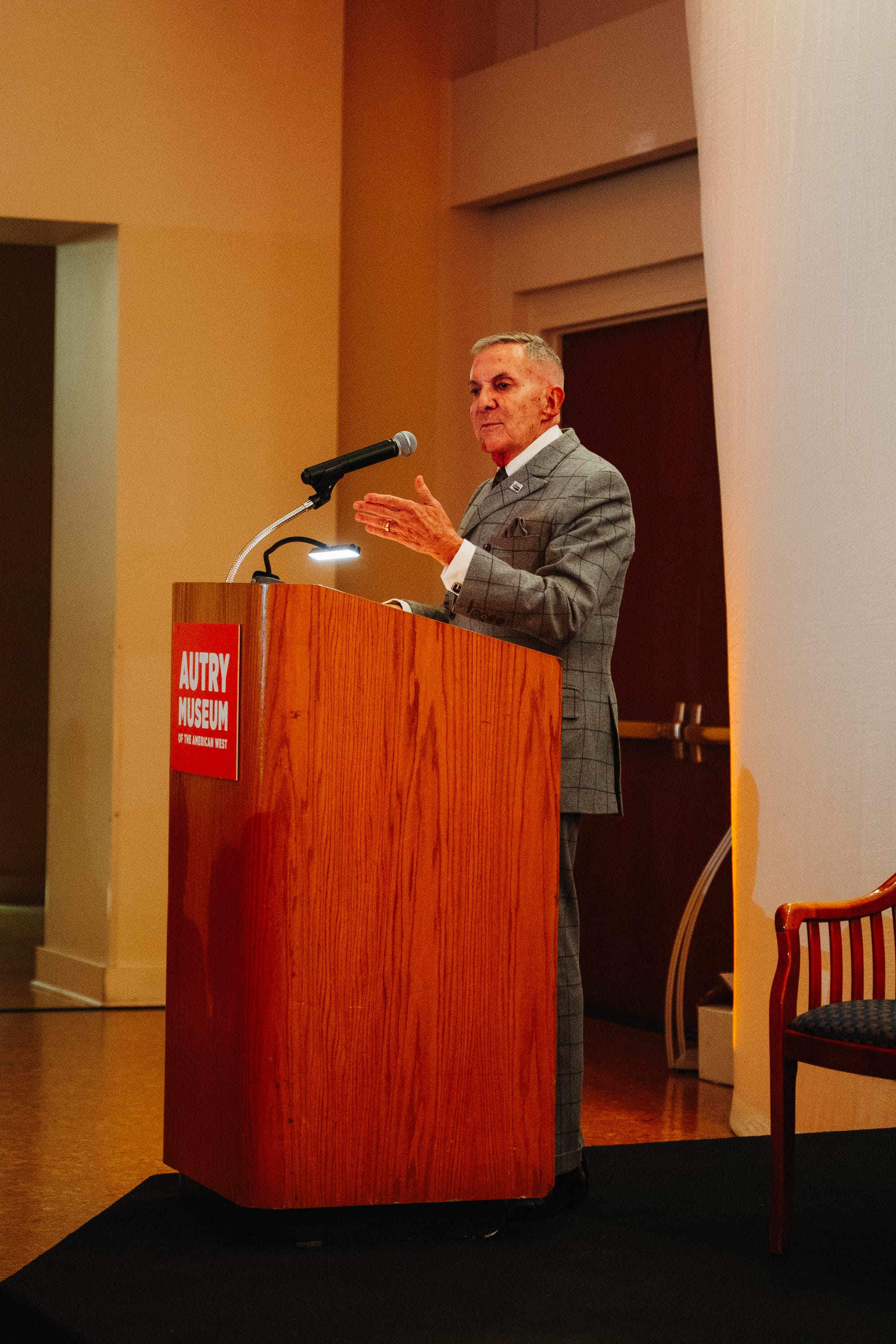
At the Autry, just as he had at NMAI, West worked to center the voices of Indigenous peoples — “which was, from a curatorial standpoint, a big change,” he said.
Today, Pourier wonders if Native youth fully grasp the hard work it took to repatriate thousands of culturally significant items and to upend how museums represented and engaged Indigenous communities.
"That generation of Rick’s — those leaders are saying now our kids take it for granted that they can walk into the ceremonial house or they know their [Indigenous] language by high school because they've been in an immersion program for 12 years,” Pourier said. “That was a movement across all fronts, not just in the collections of the museums. It was across all aspects of culture, language and community.”
The history-making wins Native American women had in the Nov. 3 midterm elections parallel the progress leaders like West fought for in the larger culture, Phillips contends. Peggy Flanagan of Minnesota and Mary Peltola of Alaska were elected senators, while Deb Haaland of New Mexico was elected governor.
“It is a moment, and we hope that it doesn't go away,” she said.
But real challenges remain. Some museums continue to exclude Indigenous peoples as consultants, Phillips said. The fact that people of Native American descent constitute only 3 percent of the national population makes advocacy more difficult at times.
"It's hard to get around that fact,” West said. “There are downsides to that. Fortunately, there are any number of legal principles that protect the integrity of governmental sovereignty on the part of Native peoples. We are different from any other ethnic group in this country in that regard."
"There are any number of legal principles that protect the integrity of governmental sovereignty on the part of Native peoples. We are different from any other ethnic group in this country in that regard."
From his archives, he said, he hopes people learn about the efforts required to improve relations between Indigenous communities and museums. West ultimately chose to put his papers in the Autry because it is close to his home in the Los Feliz neighborhood of Los Angeles. Rather than taking a cross-country flight to access the materials, he can take a short car ride. He also trusts the Autry staff to safeguard his archives, he said. At huge institutions like NMAI, “sometimes particular bodies of material sort of get lost in the mix.”
As West reflects on his archives and his career, he is certain that growing up the son of a Cheyenne painter and sculptor shaped his professional path and approach.
“Artists, as far as I’m concerned, always have been and always will be culture bearers for Native communities,” West said. “Our artists do not descend from the Enlightenment and what came to us from Europe in the way of art history. For us in the Native community, there has always been a magnificent confluence between art and culture. What you see in art is how we live and what we value.”
This article — produced by The Fault Line News — is available to republish for free. For republishing inquiries, please contact us.