How Rewriting California’s Story Could Change its Future
Author and naturalist Obi Kaufmann wants Californians to rethink their relationship with water and fire — and consider what the loss of the grizzly bear can teach us about biodiversity.
"California, in many ways, does not exist."
The new book "California Inside Out: Mapping an Ecology of Mind" makes that provocative claim.
For author, artist and naturalist Obi Kaufmann, California is not so much a place as a story. Centuries of human decisions, cultural changes and relationships with the land have shaped a modern narrative about the Golden State. But that story, he argues, can change.
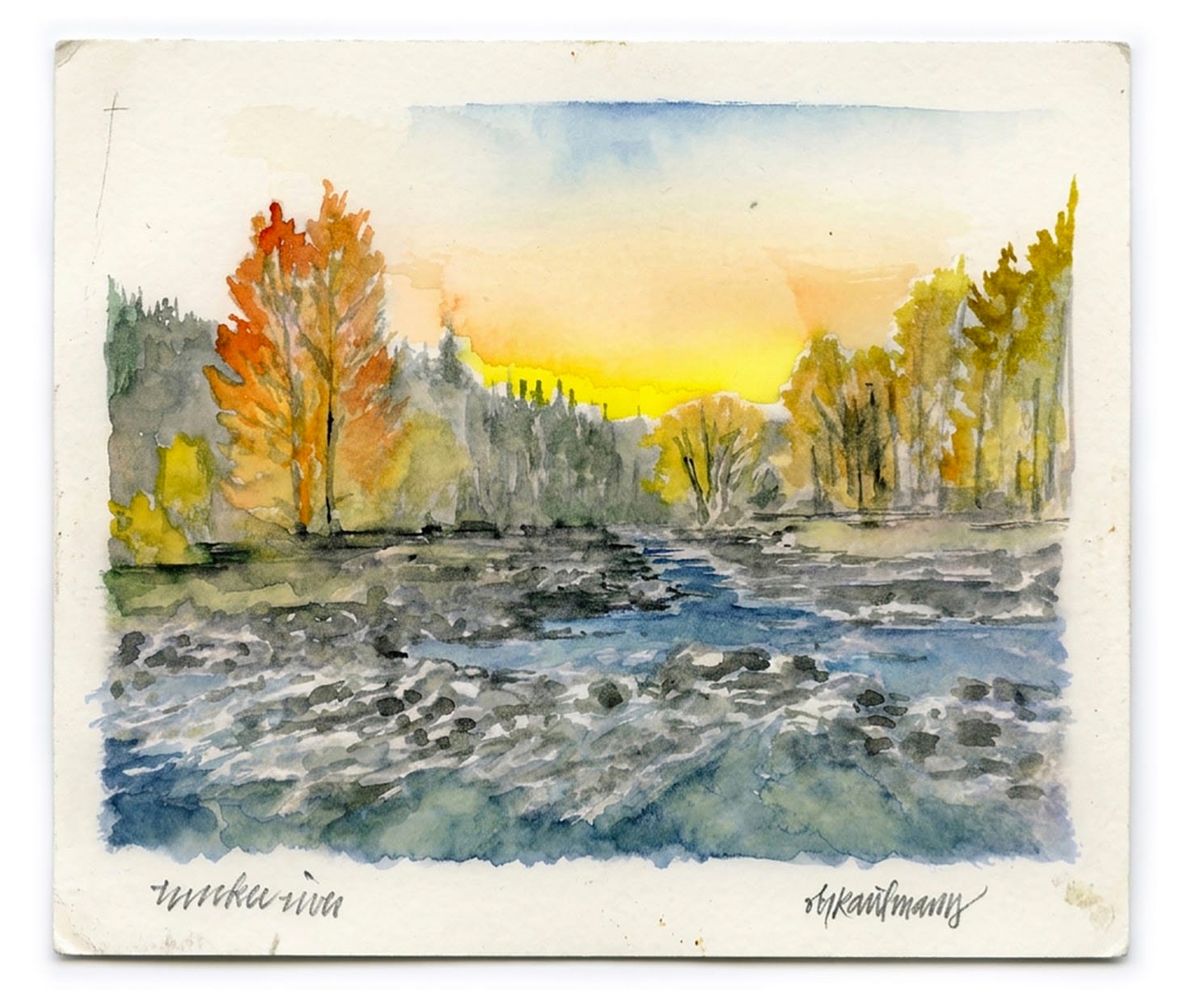
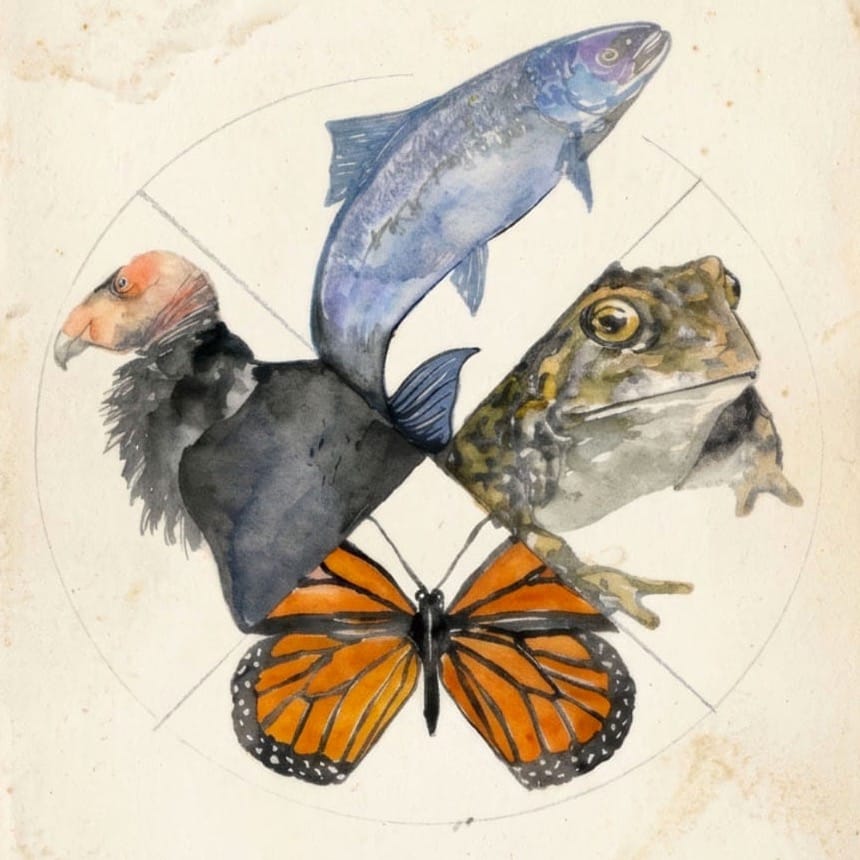
"California Inside Out," which debuts Tuesday, explores the state through a combination of art, science, history and memory. Featuring his vibrant watercolor paintings of California landscapes, animals and plants — and original hand-drawn maps — Kaufmann uses storytelling to better understand the relationship between people and the places they call home.
His essays explore some of the most pressing questions in the state. After wildfires have devastated communities, how should the public rethink its relationship to fire? How should water policy be rethought in an increasingly uncertain climate? And how can protecting biodiversity help build resilience for the future?
At the center of Kaufmann's work lies a larger and more profound question: What does it mean to belong to California?
He contends that humans are not separate from the natural world, but part of it — and that protecting California warrants a reevaluation of the responsibilities that come with living here. Without a deeper understanding of our relationship with the land, he warns, the California of the future will be "poorer and simpler."
Once a tattoo artist — ink covers his arms and hands — Kaufmann is now the award-winning author of several books on California's ecology, including the best-selling "California Field Atlas" and "The State of Fire: Why California Burns."
In addition to discussing fire, water and narrative with The Fault Line News, he touched on an assortment of other topics, including his love for Mount Diablo, how naturalists are like sorcerers and what California lost with the extinction of its grizzly bears.
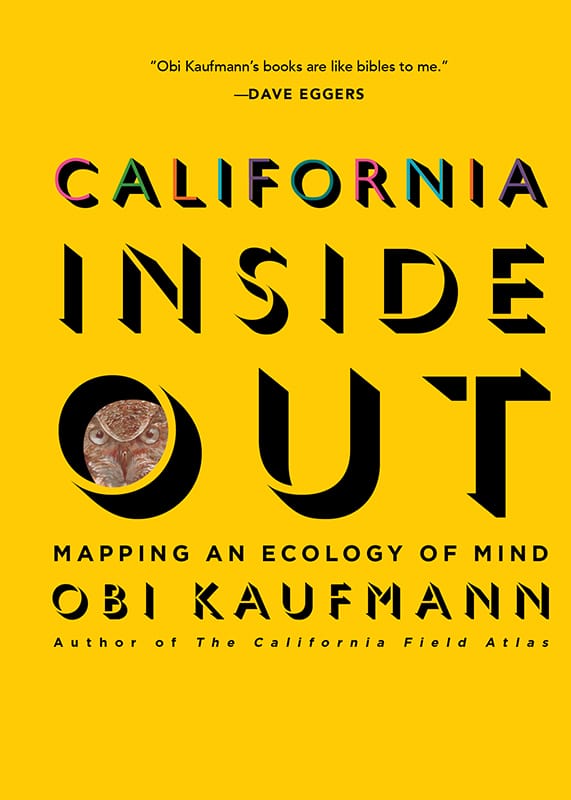

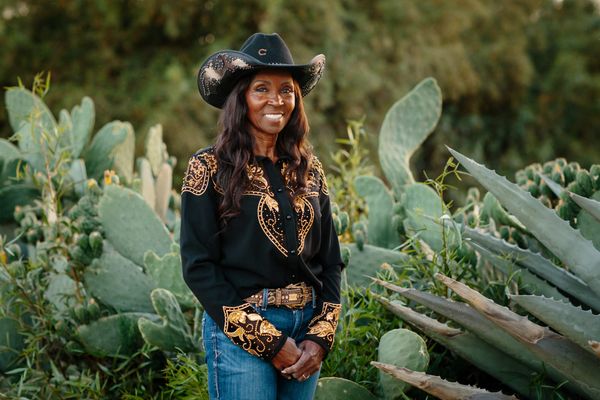
Obi Kaufmann, author of "California Inside Out." Courtesy of Heyday Books.
This interview has been edited for clarity and brevity.
Anthony Nittle: You were born in Hollywood and live in Oakland today. What landscapes and experiences shaped your understanding of California?
Obi Kaufmann: I come from two scientists. My father was an astrophysicist, the director of the Griffith Observatory in the early ’70s when I was born, and my mother is a clinical psychologist.
When I was 5, my family moved to the East Bay, about 25 miles east of San Francisco, to Mount Diablo. I cut my teeth as a young naturalist on the slopes of that beautiful sage-covered wilderness that sticks out like a gem of biodiversity into the Central Valley. It catches seeds from the Pacific Northwest and the desert Southwest, so you get this really unique vernal bloom every spring that enchanted me from a young age.
Art is about making paintings to more gratefully participate in the enjoyment of how beautiful the more-than-human world can actually be. Yet my trained academic mind is about systems thinking, complexity theory and understanding how patterns of information distribute themselves inside the physiography of California’s natural world.
That’s the throughline across all of these books: the ties that bind being scientific and aesthetic. But to get back to your original question, it’s all about Mount Diablo. I love that mountain more than I can say. People ask me what my favorite part of California geography is, and I would probably call that little peak my favorite of all the beautiful places in California.
AN: Your work connects art, science, natural history, mapmaking, poetry. How do you tie all those disciplines together?
OK: My 9-year-old niece asked me the same question: “What do you do? What do I say to my friends about what you are?”
I like to consider myself a “naturalist.” When I was a young boy and I met naturalists who could tell me about different species of flowers and identify trees, I thought it was almost a magical power.
As a naturalist, I’m often asked how nature works. Yet as an artist and author, I’m much more interested these days in what nature means. I think it’s in that realm of narrative that we can uncover new words, new phraseology and new mindsets that equip us for what is to come.
AN: In “California Inside Out,” you write that the state’s most precious resource isn’t water, forests or even biodiversity, but sharing a common trusted story. Is there a story Californians keep telling that needs rewriting? What are some misconceptions about the state?
OK: The subtitle of my second book “The State of Water” is “Understanding California’s Most Precious Resource,” implying that the liquid stuff itself — water, the life-giving substance that we need every day — is the most precious resource in this otherwise arid environment.
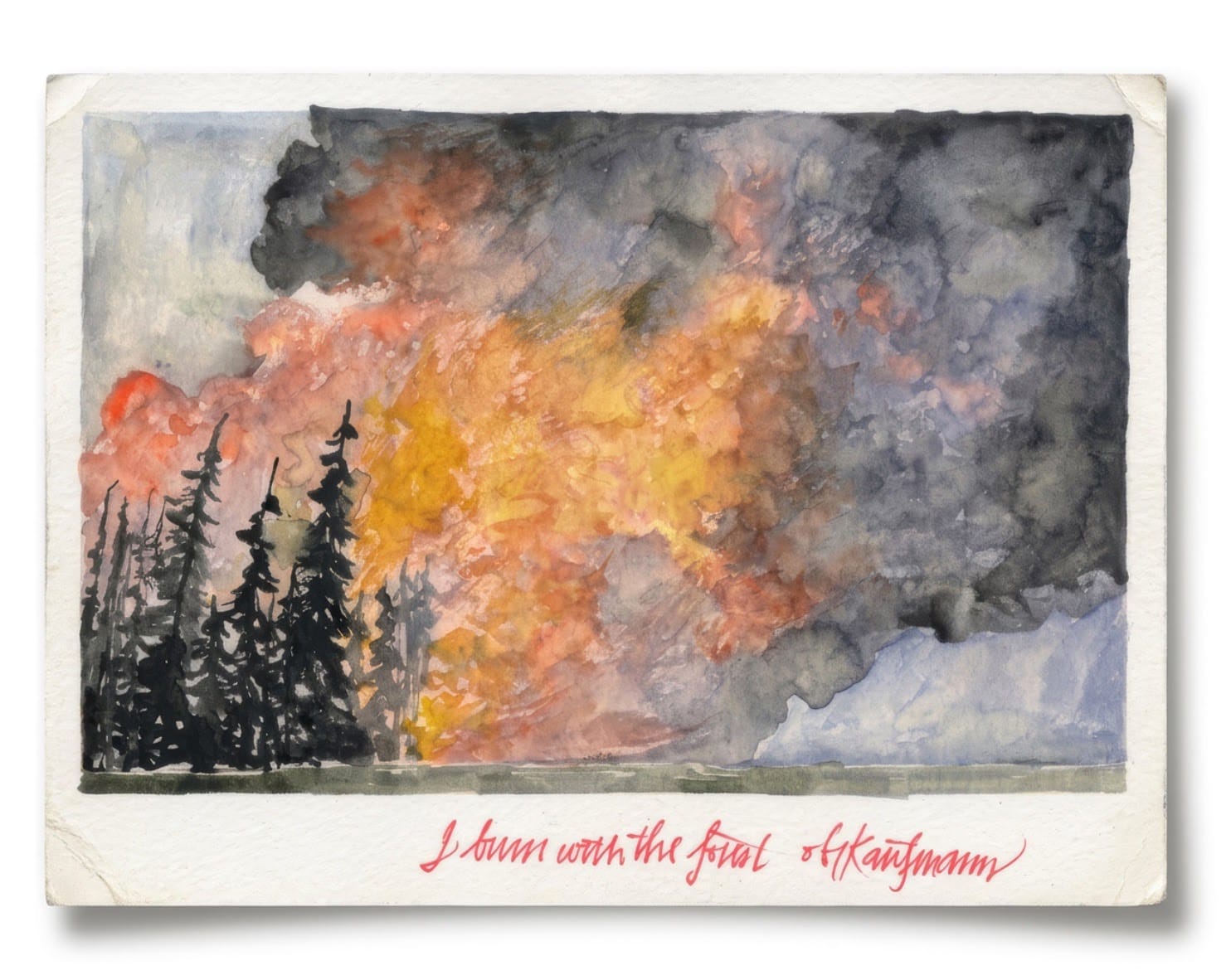
And, yet, touring this book for years, I’ve seen some basic misconceptions about the ecological being of California. One of those misconceptions is about fire. What if wildfire were revered rather than reviled? When you turn on the nightly news, the story of fire in California is 100% destruction, 100% tragedy. But that is not the ecological role of fire in the California landscape.
The role of ecological fire in California is, strangely enough, a very old human story. California has been stewarded for thousands of years through the application of fire on the land by Indigenous peoples across the state. By burning California, you are engaging in a nutritive vector toward ecological health. Every arboreal habitat in California is either adapted to or dependent upon the regular return of fire. How about that for a revolutionary idea?
We have to get into those rhythms and understand that traditional ecological knowledge of how fire is applied on the land is essential ... Fire is always on the way in California. Fire is not a bug in the system. Fire is the system.
Getting right with fire in California is ... the primary thing that we can do such to leave California's natural world in a better state at the end of the 21st century than we left it at the end of the 20th century.
"Fire is always on the way in California. Fire is not a bug in the system. Fire is the system."
AN: How should we adapt? It’s one thing to say that fire belongs here and is part of California, but how do we move from preventing the next fire to accepting fire as part of the process?
OK: I’m not running for political office, so I’m not necessarily going to recommend specific policy changes. But I do understand that there is an intellectual and institutional throughline from poetry. And what I mean by poetry is the vanguard of language: the words that we use.
Reciprocity as an ecological concept is a very new idea. It was introduced to us popularly by Robin Wall Kimmerer’s seminal work “Braiding Sweetgrass.” Reciprocity — the idea that we have to give back to the natural world — is the poetry of things.
I prefer the phrase “the more-than-human world” instead of the thing called “nature.” The words we use shape our values. What are our values? If we could articulate our ideas about our relationship to the world, what does nature mean?
What is the thing that ties me to the world? It means my relationship to my community. It means my values. It means my ethics. And it is through this that we get to something like policy.
I think we really need to have a discussion about Indigenous traditional ecological knowledge. We need to discuss the nature of our rights and our responsibilities to show up for that knowledge.
This is a fascinating opportunity to engage with a place that people really love. How do I express my love for this land? What right do I have to call myself a Californian?
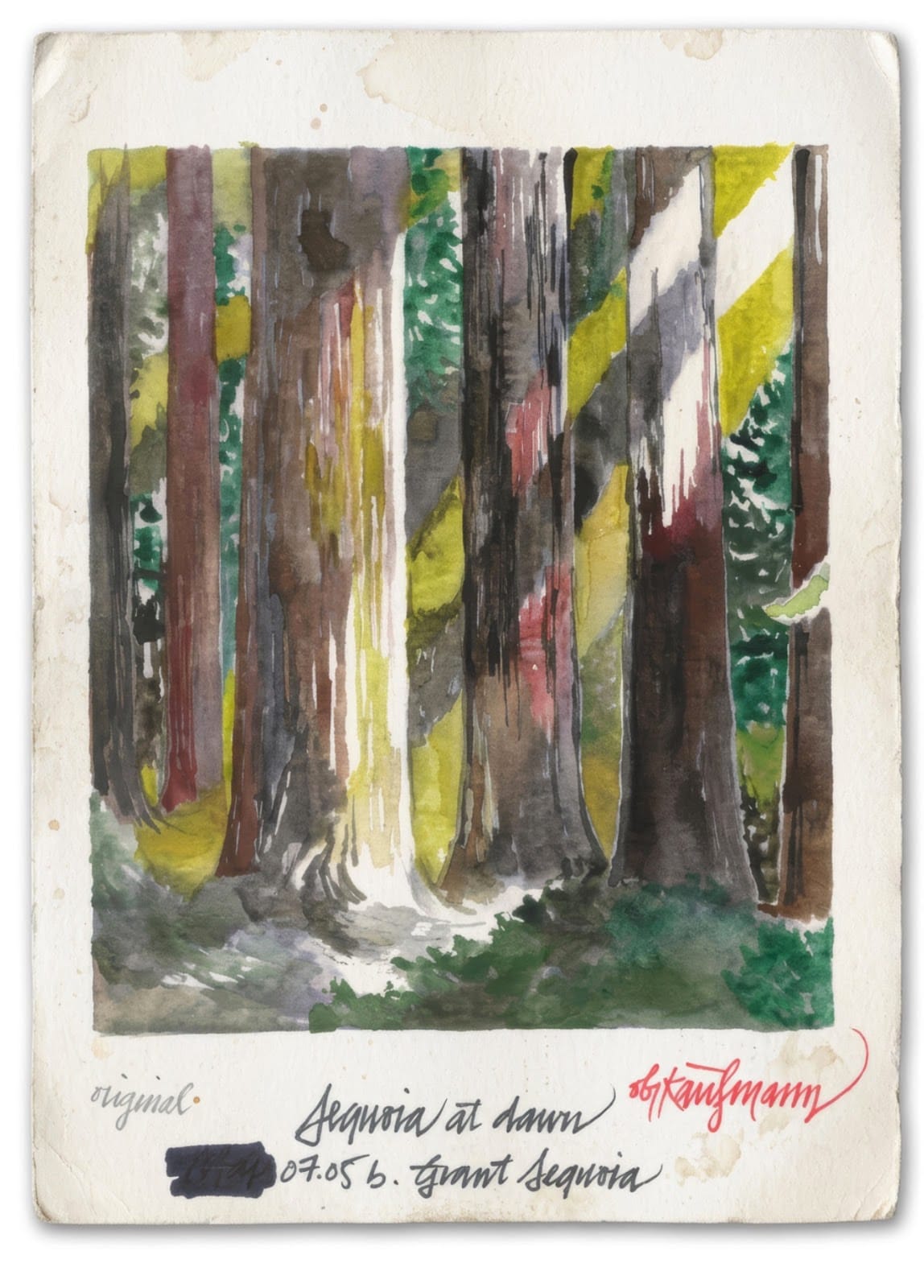
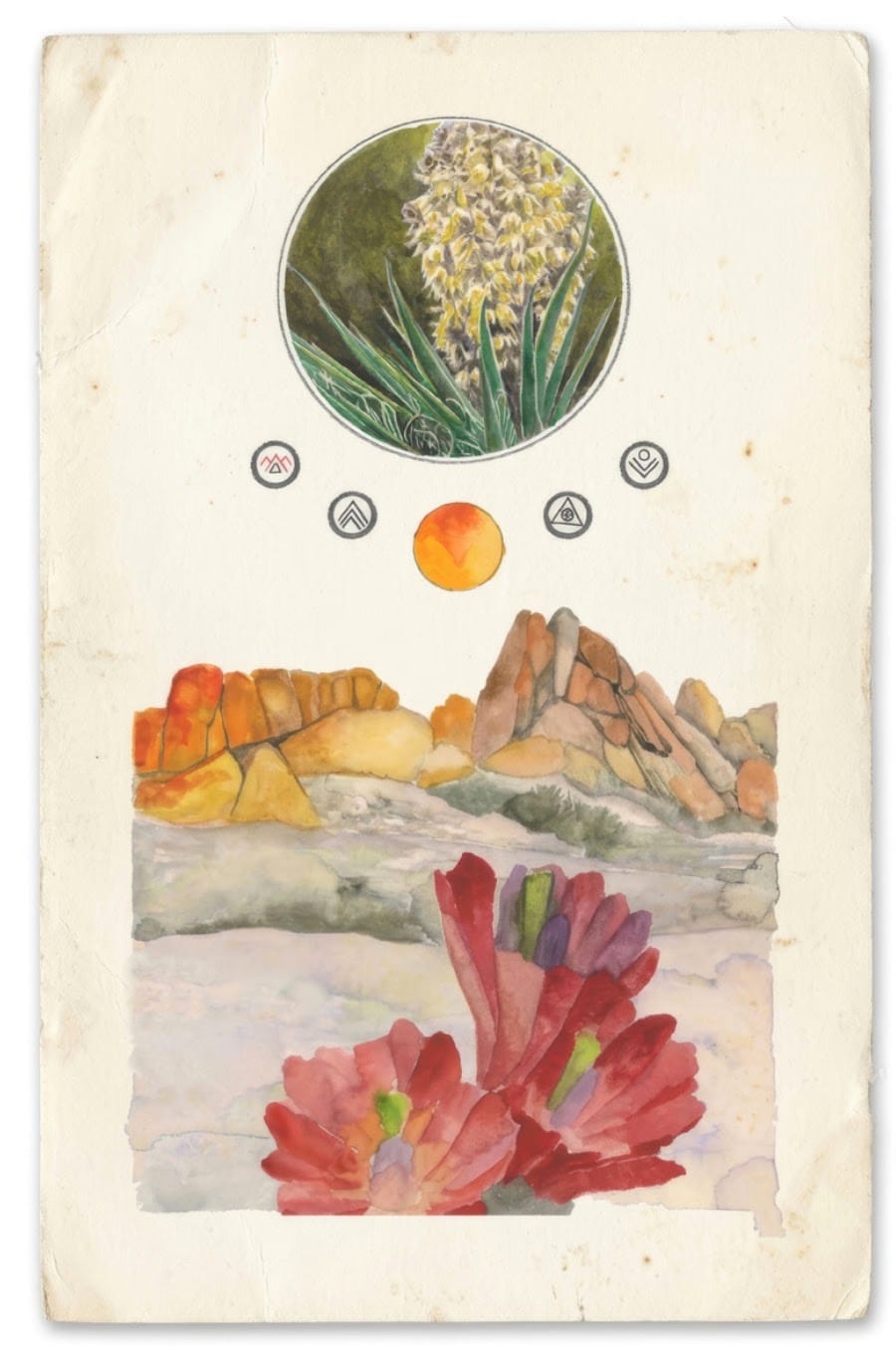
Watercolor paintings of forest and desert scenes from "California Inside Out." Art courtesy of Obi Kaufmann / Heyday Books.
AN: Your new book opens with a sketch of the California grizzly bear skull. The grizzly bear is now extinct in our state, but we still have it on our flag. What does that symbol mean to you?
OK: The grizzly bear means so much. It’s been about 100 years. The last known California grizzly was killed in 1922, and the last credible sighting was in 1924 in the Sequoia National Park area.
For tens of thousands of years, they were perfectly adapted and evolved to California. It’s easy to think that much of the health of California’s ecosystems was directly tied to behavioral aspects — the ecology — of the grizzly bear.
Before the coming of Europeans and later Americans, the Indigenous peoples of California had a very different covenant with the largest brown bear in North America. My podcast co-host, author Greg Sarris, who is chairman of the Federated Indians of Graton Rancheria in Santa Rosa, says that it was the coming of the gun that broke the covenant — that the violence and noise the gun represented broke the relationship between humans and bears. The bears became fearful. Bears became violent.
But we had this incredibly powerful apex predator. And what do apex predators do to ecosystems? They dictate fecundity across all trophic levels. They establish parameters for predator-prey interactions among all kinds of species.
The bears gathered around these estuarine and riparian environments, feasting on 60-pound Chinook salmon, sometimes hundreds of thousands gathered at a time. Imagine a 1,000-pound bear with claws digging into nutrient-rich soil, depositing calcium, phosphorus and nitrogen into the mud. Then you get an environment where John Muir describes 1,000 wildflowers in every footprint. You can imagine the pollinators — different species of bees and insects for every flower species across the Central Valley — and how bears influenced that system.
What we have now is a simplified world without the grizzly bear. We have a simplified California. Today, every single ecosystem type in California — every landscape type — is either threatened, endangered or critically endangered.
"What we have now is a simplified world without the grizzly bear. We have a simplified California."
We are at the threshold of a miracle right now because we have a very low extinction rate in the state. It’s less than 1%. While we have lost some beautiful creatures, like the California grizzly bear, we still have less than a 1% extinction rate despite climate breakdown caused by anthropogenic global warming.
Taking care of biodiversity in California is ultimately the reason I wrote this new book ... All human communities, all human settlements, depend upon the complex systems of resiliency that only biodiversity can afford.
AN: What gives you hope for California’s future?
OK: Hope is a wonderful concept to wrestle with. I often think of the California State Water Project as an example of what can be done in the modern mindset to technically address ecological issues and serve our communities. Over the past 100 years, what Californians have done with water rivals anything humans have done anywhere with anything.
I would put the California State Water Project up against the Great Pyramids of Egypt for the amount of work it does every single day to address this most altered aspect of our natural topography. The waterscape of California has been completely transformed in a productive manner, allowing us to have the megalopolis of Los Angeles where it is geographically situated — 100 miles from the nearest major natural freshwater source — which is a mind-bogglingly modern idea.
Whatever has been done with water in the past 100 years, that incredible technical challenge will be met only by what happens over the next 100 years.
We again have to address core engineering ideas about how water moves, how we address water as a resource given climate breakdown, how water functions as a storytelling device in our society and how that relates ultimately to fire. Fire and water form these bookend parameters for infrastructural growth and economic development.
Getting right with both of these core elements is key not only to leaving the more-than-human world in better shape but also to taking care of the economic promise and progress of California as a political entity.
Whatever the process is, it’s going to be democratic. We need to not abandon our creative capacities or abdicate them to artificial forms of problem-solving. There is a trajectory. There is a heading toward greater and unparalleled abundance, joy, hope and love.
This article — produced by The Fault Line News — is available to republish for free. For republishing inquiries, please contact us.