The Dodgers Have the 'Asian Avengers' — Why That Representation Matters
For Asian-American fans, the team's diverse roster is a source of pride, but can visibility alone drive social change?

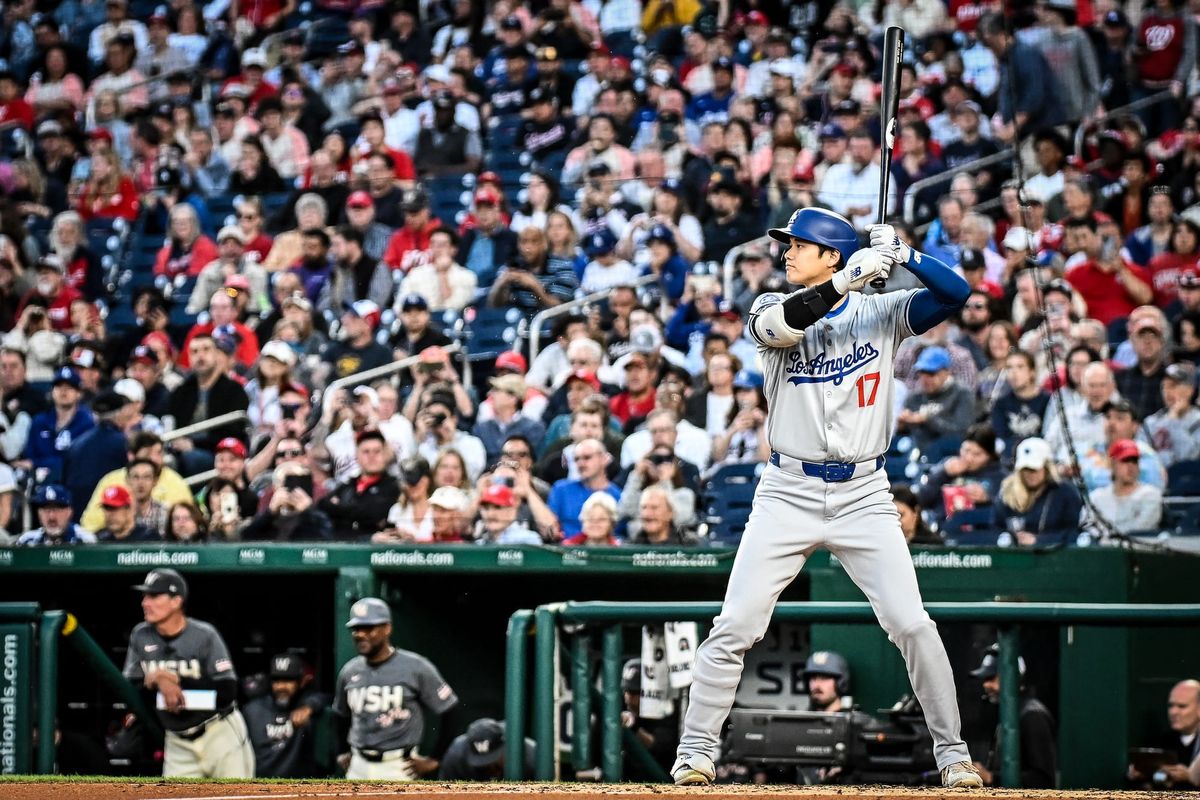
While emceeing a bar mitzvah in January, Paul “PK” Kim had an experience that left him momentarily speechless.
“You're so cool because you're Korean,” the young partygoers gushed.
Never before had the comedian been told his ethnicity made him hip. If anything, he had received the opposite message growing up in the 1980s and ’90s in Burbank, California. Asian Americans made up a small percentage of the San Fernando Valley suburb and his classmates knew next to nothing about Korea.
“They used to ask if Korea was a city in China,” he recalled.
But Gen Alpha has grown up in an entirely different context, one in which drama, music, beauty, fashion and social media from East Asia set global trends. So when Kim asked the kids if he’d heard them clearly, they repeated that being Korean made him cool, adding they wished they were Korean, too.
For Kim, that moment would have been unthinkable during childhood. “I’ve faced racism my whole life,” he said.
It’s not the only development he would have struggled to imagine.
The roster of his beloved baseball team, the Los Angeles Dodgers, differs remarkably from its composition when he was a little boy. No Asian or Asian-American players belonged to the Dodgers until the debut of Korean pitcher Chan Ho Park in 1994.
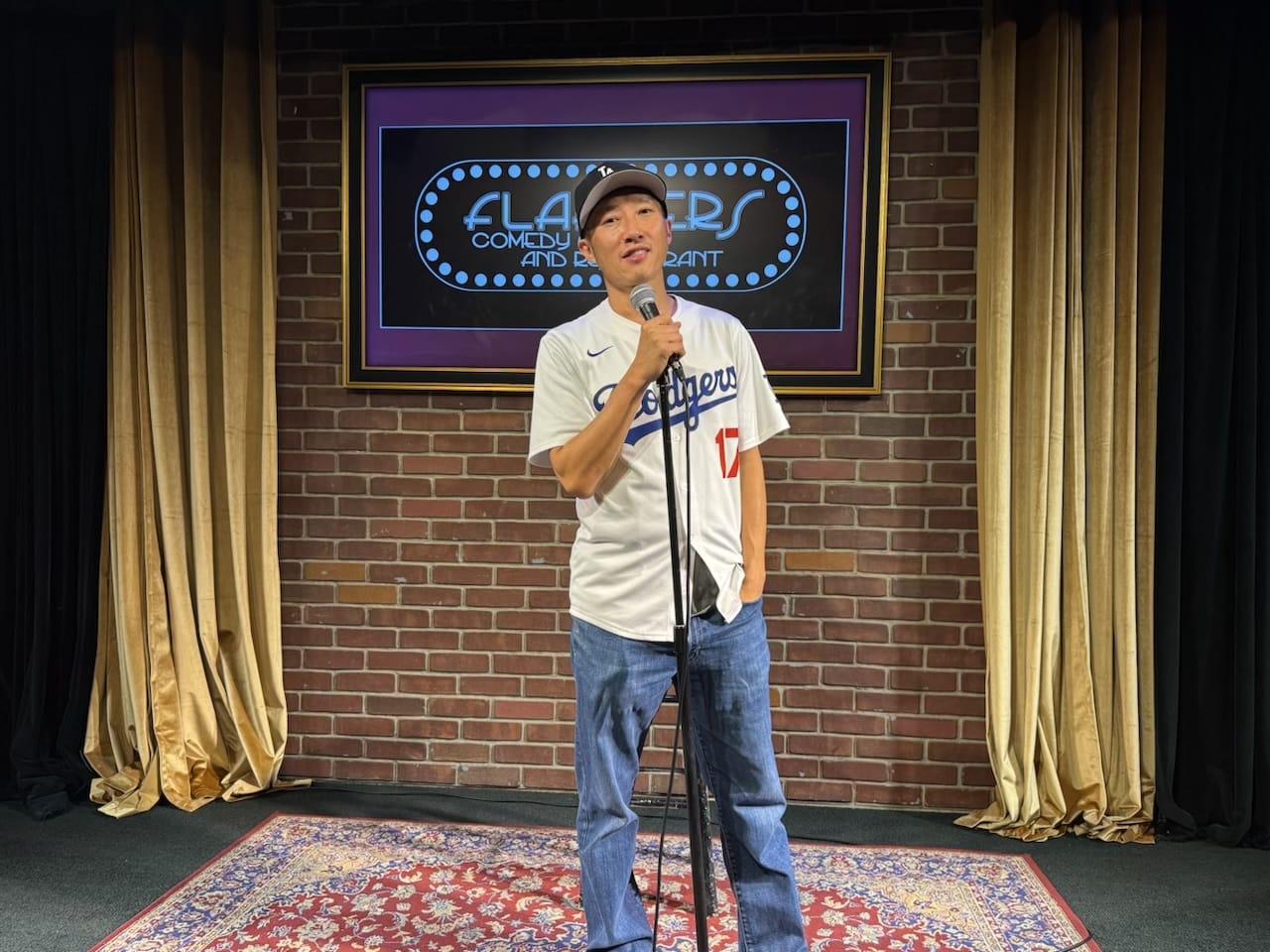
Today, the team includes five such players — Shohei Ohtani, Yoshinobu Yamamoto, Rōki Sasaki, Tommy Edman and Hyeseong Kim — plus manager Dave Roberts. The organization stands out, then, not only as the back-to-back defending World Series champions but also as the Major League Baseball (MLB) team with the most athletes of Asian descent.
“I call the Dodgers the Asian Avengers.”
“I call the Dodgers the Asian Avengers,” Kim said.
For Asian Americans who grew up seeing almost no one like themselves in the Big Four sports leagues — baseball, basketball, football and hockey — the current Dodgers roster marks a sea change. It also challenges longstanding stereotypes: that Asian and Asian-American men are unmasculine and that Asian people are outsiders in the United States.
“Having such an American pastime be represented by Asian and Asian-American players counters the perpetual foreigner stereotype,” said Nancy Wang Yuen, professor of ethnic studies at Crafton Hills College in Yucaipa, California.
But representation has its limits, she and other experts warn. It can change perceptions, but it falls short of real progress unless the trailblazers of sport — on the roster or in the front office — take meaningful steps toward social justice.
“It's symbolic to have the greatest baseball player who ever played to be a Japanese guy,” said Dan Kwong, a multidisciplinary artist and director of the Manzanar Baseball Project, a recreation of the ballfield at the World War II internment camp. “It's sort of a double-edged thing. Great, we have these symbols now in our culture. We are included in the culture. We are part of the picture, but don't delude yourself that oppression has vanished because of that.”

When Kim became enamored with baseball as a youth, the political implications of professional sports were hardly on his mind. The game was a way to connect with his two older brothers — 10 and 15 years his senior.
“The one thing they really did for me growing up was they always took me to Dodger games,” Kim said.
On October 15, 1988, he was home watching Game 1 of the World Series when an injured Kirk Gibson hit a two-run walk-off homer to lead the Dodgers to a breathtaking victory over the Oakland Athletics. The legendary at-bat turned the 12-year-old from a laidback fan into a full-on evangelist for the Boys in Blue.
“I was with my older brother and his two friends, and we were jumping up and down,” Kim said. “And I remember we opened the door to the neighborhood, and we were screaming, and we could hear everyone screaming back, like the whole neighborhood. It was just pandemonium.”
But during the early years of his fandom, Kim could not find a player on the team or elsewhere in professional sports who looked like him. Meanwhile, his classmates had no shortage of athletes who reflected their ethnic backgrounds.
“I remember playing basketball in elementary school, and all the Black kids were like, ‘I’m Magic Johnson.’ All the white kids were like, ‘I'm Larry Bird,’ and I had Long Duk Dong,” Kim said, referring to the offensive exchange student character in “Sixteen Candles.” He continued, “I had no Asian athlete to even look up to. There were just people overseas, but no one in America.”
Outside the Big Four leagues, some Asian-American athletes excelled — among them Michael Chang, who became the No. 2 ranked tennis player in the world in 1996. His success led Asian immigrant parents to enroll their children in tennis lessons in droves, Yuen remembered. Her mother even wanted her to marry Chang.
“I personally have experienced participating in a sport because there was someone who looked like me that was pro,” Yuen said. “The fact that we have so many awesome Asian and Asian-American players on the Dodgers also helps the acceptance of Asian-American kids who are playing these sports. They don't have to be bullied because of anti-Asian stereotypes because literally the best players in the league are Asian.”
In the late 20th century, the scarcity of Asian and Asian-American athletes in U.S. professional sports — combined with racial caricatures in film — perpetuated the idea that Asian men are asexual and unathletic, Kim said. “Mass media makes an impact across the board.”
The model minority stereotype, which paints Asian Americans as studious, hardworking and obedient, leaves no room for athleticism, said Yuen, author of “Reel Inequality: Hollywood Actors and Racism.”
“The star athlete has always been kind of the masculine ideal in U.S. society, and I don't think Asian men have ever really occupied that until, like, real life,” she said. “I can't remember a single sports movie or TV show where you have an Asian male lead, and so it takes actual people to break through that ceiling.”
In the 1990s, more of those individuals began to appear on the Dodgers, who picked up pitchers Chan Ho Park and Hideo Nomo in consecutive years. But Kim was bothered to hear commentators describe the athleticism of Asian pitchers as essentially mathematical. “They just couldn't accept that, no, there's athletic Asian people, too,” he said.
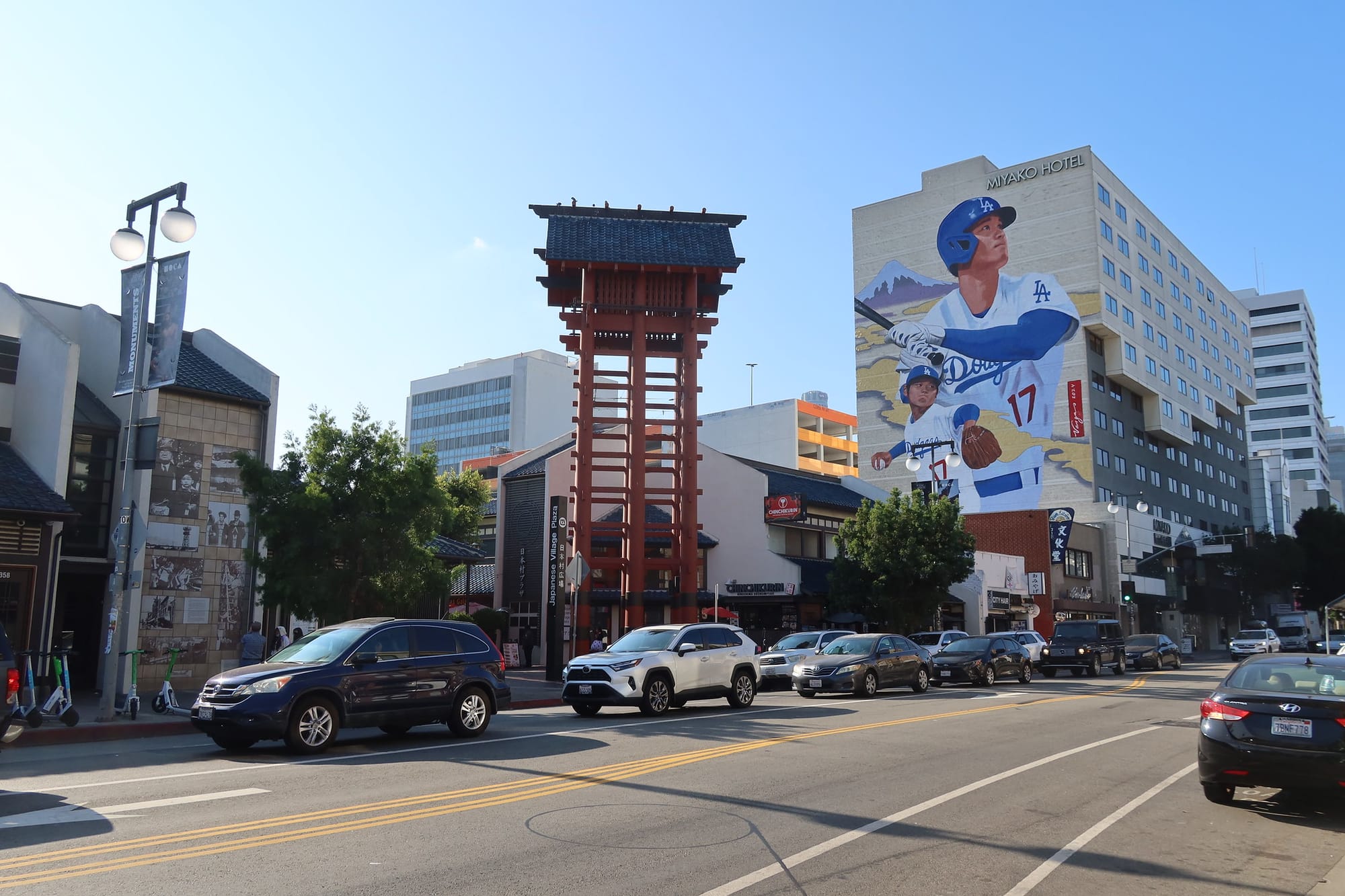
Today, those perceptions have shifted: Ohtani is considered one of baseball’s greatest players, and Yamamoto won World Series MVP in 2025. Yamamoto’s training regimen, which centers mobility, flexibility and body awareness, has drawn attention to the athleticism pitching requires, including from teammates like shortstop Mookie Betts.
After the Dodgers’ smattering of Asian players in the 1990s and 2000s — including Chin-Feng Chen, who in 2002 became the first Taiwanese-born player in the MLB — the team’s acquisition of multiple such players in influential roles today reflects a broader cultural shift.
“It does change a lot for the next generation — like everything,” Kim said. “I just emceed the LA Korean Festival, and it used to be mostly Korean. Now so many non-Asian people come for the K-pop, the K-beauty, the K-drama and the K-barbecue. It's just a whole wave.”
In baseball, the wave isn’t new. People of Asian descent have played the sport for over 150 years. Decades before Bobby Balcena made his debut in 1956 as the first Asian-American player in the MLB and Masanori Murakami made history in 1964 as the first Asian-born player, Asians and Asian Americans thrived in baseball. Their stories, however, were relegated to the margins of sports history — an oversight Kerry Yo Nakagawa, founder of the Nisei Baseball Research Project, has fought to expose for 30 years.
As early as the late 1800s, the Japanese were already familiar with baseball, according to Nakagawa, author of the 2001 book "Through a Diamond: 100 Years of Japanese American Baseball.”
Nakagawa’s family members, five generations of whom share a connection to baseball, were part of this history. His uncle, Johnny Nakagawa, was "like the Shohei Ohtani of the '20s — a hitter, left-handed pitcher, center fielder," Nakagawa said. His father threw a nine-inning no-hitter in high school in the 1920s.
In 1927, Johnny and other Nisei (second-generation) players barnstormed against major leaguers like Babe Ruth and Lou Gehrig. In Fresno, Johnny’s team “absolutely thundered the Babe Ruth All Stars, 13 to 3,” Nakagawa said. Another of his uncles pitched against Jackie Robinson when the future legend attended Pasadena Junior College in 1937.
Despite the talent in his family, Nakagawa’s elders did not play in the majors because racial segregation barred Asian Americans from professional baseball. “We had so many that could have played at a major league level, but they just never got an opportunity,” he said.
During World War II, Japanese Americans lost infinitely more opportunities when the federal government ordered them into incarceration camps. At Manzanar, softball and baseball gave internees a recreational outlet that transcended the barbed wire that confined them.
Kwong, of the Manzanar Baseball Project, grew up hearing stories about internment from his mother, who entered Manzanar at 16. She played softball with a girls' club called the Gremlins. “She told us, ‘Yeah, we were terrible,’” Kwong recalled with a laugh. “She was playing catcher one day, and the batter hit the ball and ran to first base and threw the bat and hit her in the face and broke her nose. That was her baseball story of Manzanar.”
Kwong spearheaded the rebuilding of the original Manzanar baseball field, which had a soft opening in 2024. On October 17, a full doubleheader and opening ceremonies will take place at the historic site. The Manzanar Baseball Project, Kwong said, does far more than memorialize a period of historic injustice.
“We're going to this place of sadness and trauma and injustice, and we're doing something joyful,” he said. “It's a celebration as much as it is a commemoration.”
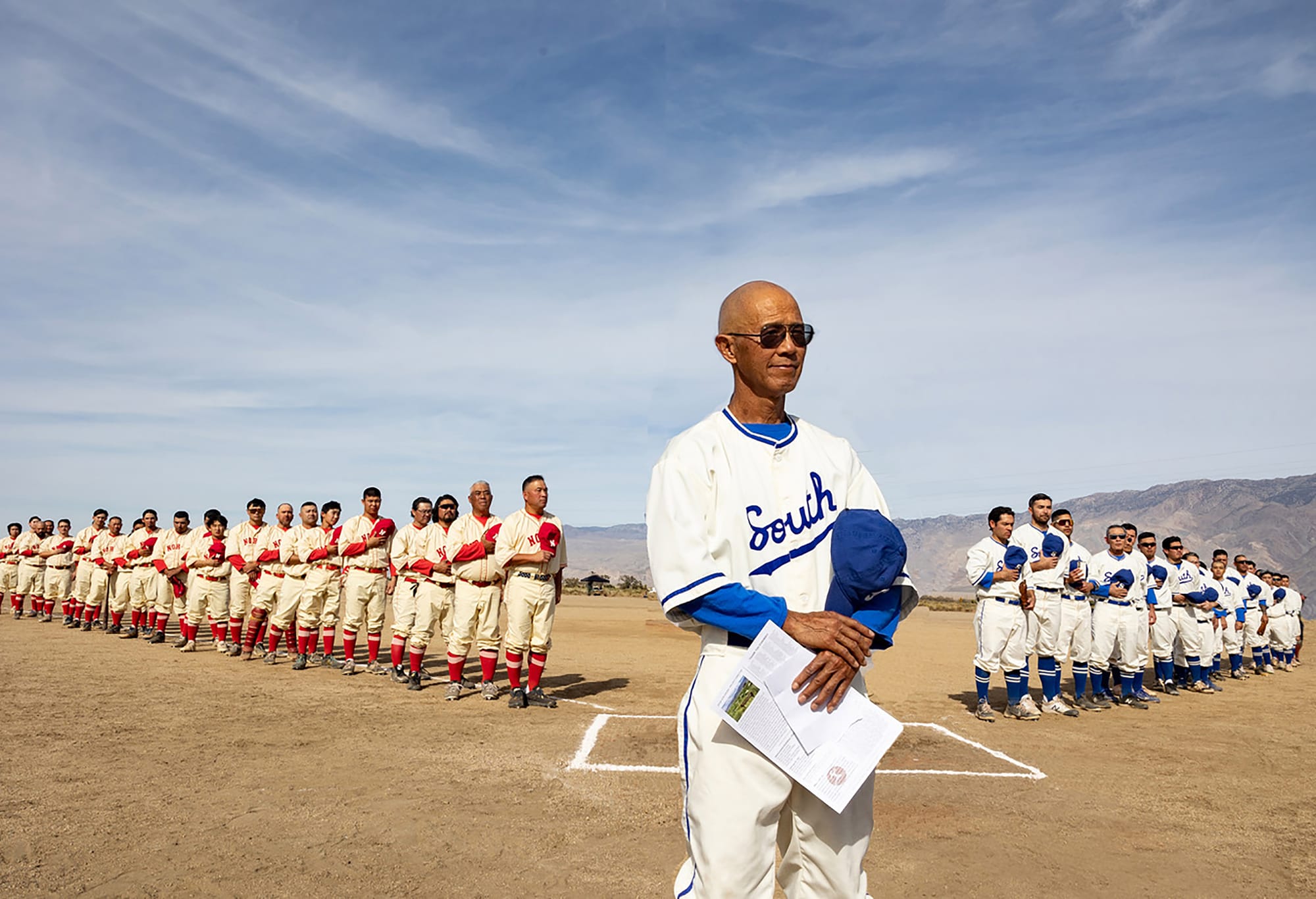
Nakagawa can’t help but wonder what fate Yamamoto, Ohtani or Sasaki would have experienced had they been athletes in the United States 85 years ago.
“You probably would have never got to see them play baseball — only from behind barbed wire during World War II, and if they were incarcerated,” he said. “Wouldn't that be a shame if we couldn't see Ohtani and Sasaki and Yamamoto at a major league level? But that's the way it could have been."
Nakagawa has helped educate the public about the legacy of Japanese-American baseball players through the Nisei Baseball Research Project's exhibit, “Diamonds in the Rough.” Starting with the Dodgers hosting the All-Star Game in 2022, the exhibit has appeared at every MLB All-Star FanFest, with stops in Seattle, Texas, Atlanta and Philadelphia. It has also traveled to the National Baseball Hall of Fame and Museum in Cooperstown, New York, and its Japanese counterpart in Tokyo.
“African Americans broke the baseball color line,” Nakagawa said. “Japanese Americans built this bridge across the Pacific. Similar struggle, different impact, but we feel equally important.”
Some Dodgers fans see parallels between the World War II incarceration camps and the detention centers that officials are sending immigrants to today. They disapprove of the Dodgers visiting the White House after their 2024 and 2025 World Series wins to meet with President Donald Trump, who campaigned on “mass deportations now.” They also object to Mark Walter, the team’s controlling owner, partnering with Palantir Technologies, a federal contractor that provides data integration, analytics and artificial intelligence support for U.S. Immigration and Customs Enforcement.
These fans question whether one can celebrate the team’s Asian stars while objecting to its politics.
“I don't know if I can ever forgive the Dodgers,” filmmaker Renee Tajima-Peña said. “They run off to the White House for two years, and so many of them also are either immigrants or have diaspora kinds of backgrounds. If they weren't Dodgers, they'd be fair game as well. I don't see why they don't see it.”
Growing up in Altadena in the 1960s and ’70s, Tajima-Peña had no Asian-American sports heroes. “We had Bruce Lee on screen,” she said. “There are very few. So when Ohtani came on the scene, I was excited. I said, ‘Oh, I think I have to like the Dodgers now.’”
She wishes the Japanese players on the team spoke out about political issues more. “Too many people have no power, no leverage, and take huge risks, and they still speak up," she said. “But there are not too many Jackie Robinsons in the world.”
Kim shares her criticism of the Dodgers’ White House visits and Walter’s business dealings.
“The Dodgers’ definite No. 1 fanbase is Latino, and I’m very disappointed,” he said. “I give props to Mookie and Kiké [Hernandez] for not going to the White House this year. Very disappointed in everybody else. I hope they just think more of the community and don't lose sense of that.”
Tajima-Peña still celebrates the visibility of Asian players on the Dodgers — “as a Japanese American, I feel a lot of pride” — but she recognizes that representation only goes so far.
“Representation has its limits,” she said. “Not all skinfolk are kinfolk.”
Her concerns stem from history. Japanese Americans have supported immigrant rights and opposed mass detention for decades. The federal government incarcerated her own family members during World War II. Her father avoided that fate by leaving the West Coast for Chicago. He was later drafted and visited his incarcerated parents wearing his military uniform.
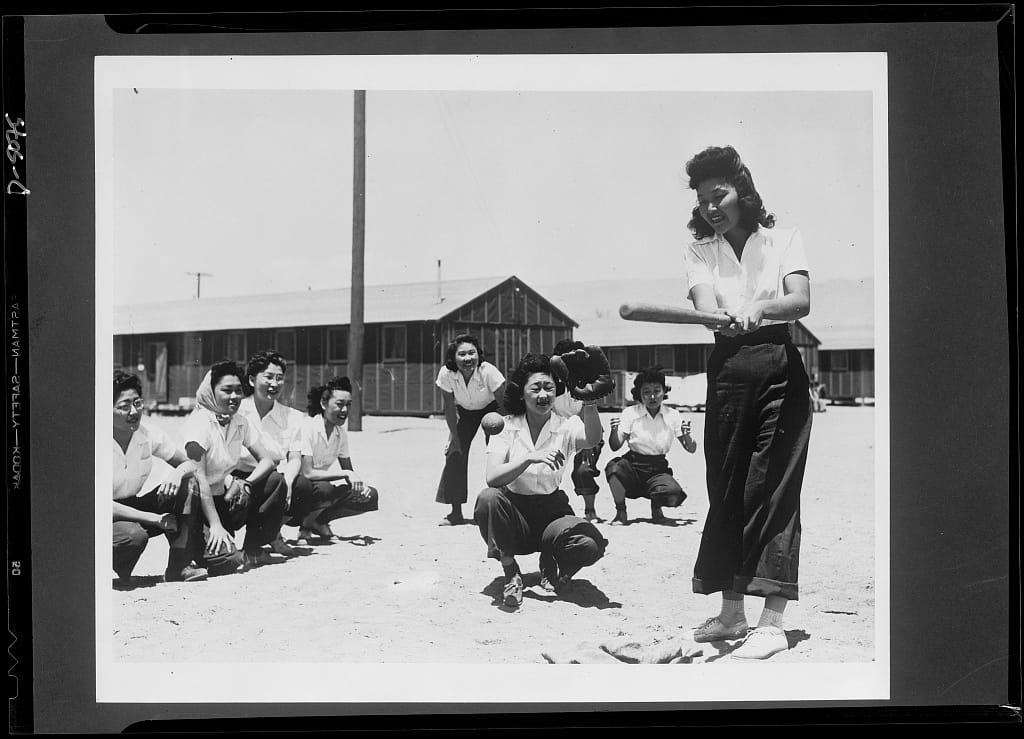
“He never understood why the guards were pointing inside the camp and not outside the camp,” Tajima-Peña said.
Today, ICE enforcement has led to the arrests and detentions of Asian immigrants, along with Latine ones. Tajima-Peña can feel fury at the club’s owner for profiting from detention and pride watching a superstar like Ohtani — but her loyalty to the team has disappeared.
Nakagawa has a different take. Though he grew up near Fresno as a San Francisco Giants fan, he’s rooting for the Dodgers during the postseason.
“Dave Roberts has always been so supportive and loves to know our history and how he fits into our legacy as being a Japanese-American ballplayer as well as a Black one,” Nakagawa said. The team's support of his project, he added, has helped amplify the stories of past athletes who were “marginalized, invisible and forgotten.”
Sociologist Yuen grew up in Cerritos, California, often feeling marginalized, as if she could not openly celebrate her Taiwanese heritage.
“You had to assimilate, right? So anything East Asian, even amongst Asian Americans, was not necessarily welcomed in the way that it is now,” she said of life in her ethnoburb. “I didn't have anyone else to necessarily enjoy East Asian music or drama with.”
Now, she teaches students from all backgrounds who obsess over Japanese anime and Korean cinema — a shift she also felt at the 2024 Japanese Heritage Night at Dodger Stadium, where hundreds of non-Asian spectators turned out for a taiko drumming group, J-pop artist and “Star Trek” actor George Takei throwing out the ceremonial first pitch.
Her keepsake from the night is a jersey featuring koi fish, a pheasant feather texture and the Dodgers spelled out in phonetic Japanese text. “Every time I wear my jersey at other nights, people are like, ‘Oh my gosh, where'd you get that?’”
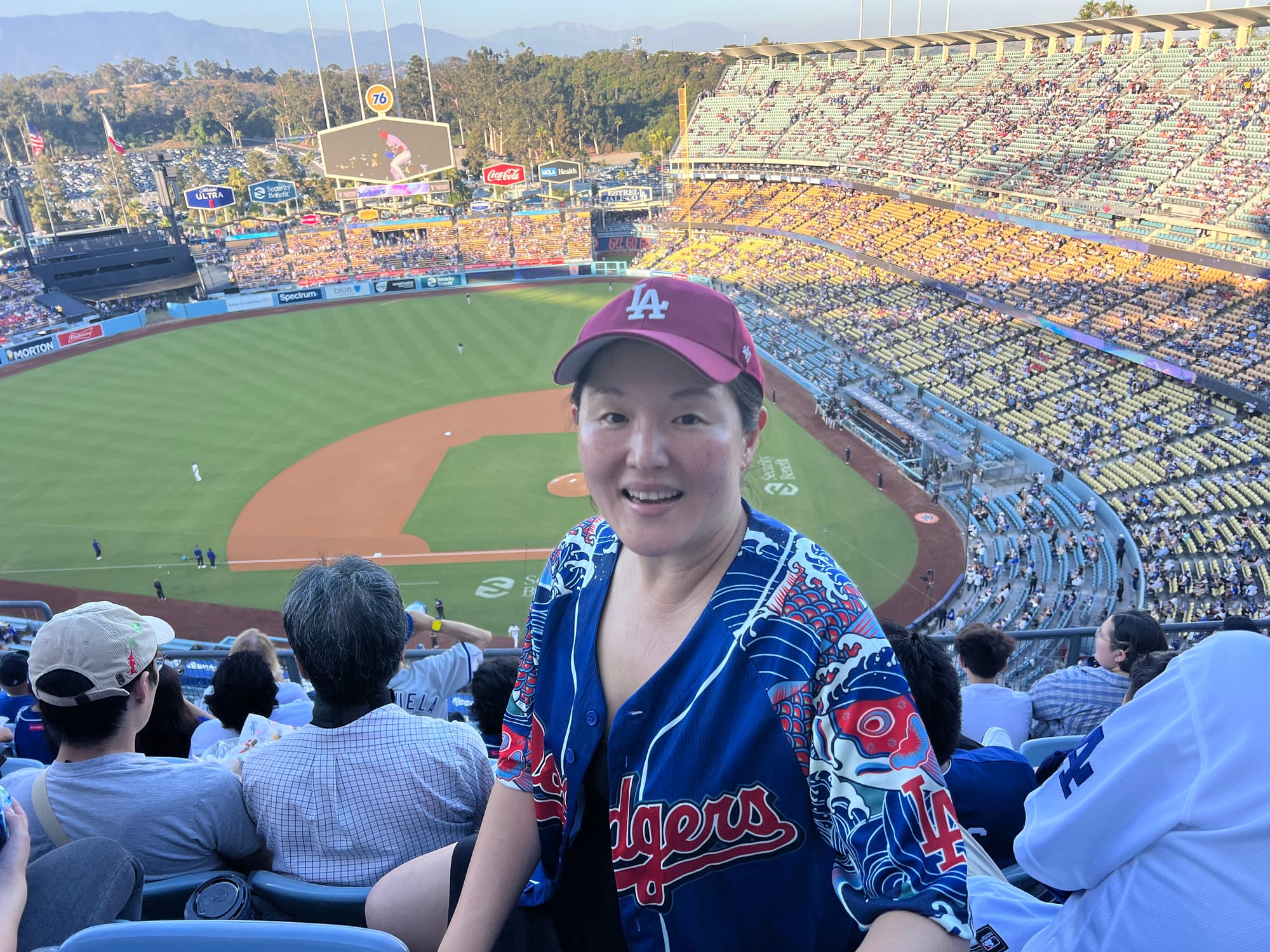
The interest reflects the diversity both in Los Angeles and on the Dodgers, she said. With political tensions dividing the country, seeing players from different backgrounds working together and respecting cultural differences — such as bowing to the Japanese players — gives Yuen hope for society.
But seeing the devotion that Dodgers fans show to the Asian and Asian-American players in particular leaves Yuen in awe. “It explodes the stereotypes,” she said. “The Asian baseball players — they're finally getting their lead roles.”
Observing the hush that falls over the stadium when Ohtani steps up to bat has left an impression on her. “Everybody's quiet because they want to see what he’ll do,” she said. “I don't think I've ever walked into a room and everyone's quietly staring at me. A lot of times Asians are invisible.”
“But for Ohtani to go onto the field and everyone's silent because they're waiting for him to hit a home run, that is extraordinary,” she said.
Kim couldn’t pinpoint the words to describe how it feels to see the Dodgers’ Asian stars so widely celebrated. Above all, it is inspiring because of the message it sends to Asian Americans.
“We always feel like we have to ask for permission for everything, to break what they call the bamboo ceiling,” he said. “It just makes you feel like you can dream big and aim to be great.”
This article — produced by The Fault Line News — is available to republish for free. For republishing inquiries, please contact us.