‘Queer Joy Is Resistance’: The Dinah Marks 35 Years — and a New Chapter
In Palm Springs, a festival that has drawn up to 20,000 revelers nearly disappeared this year. Its new owners say the need for queer women to gather has never been greater.
Before Lex Ortega came out as nonbinary, they didn't know if their family would accept them.
“My dad was born and raised in Mexico," they said. "My mom was a multi-generational Mexican American, so these issues of identity and sexual orientation weren't necessarily things that were talked about.”
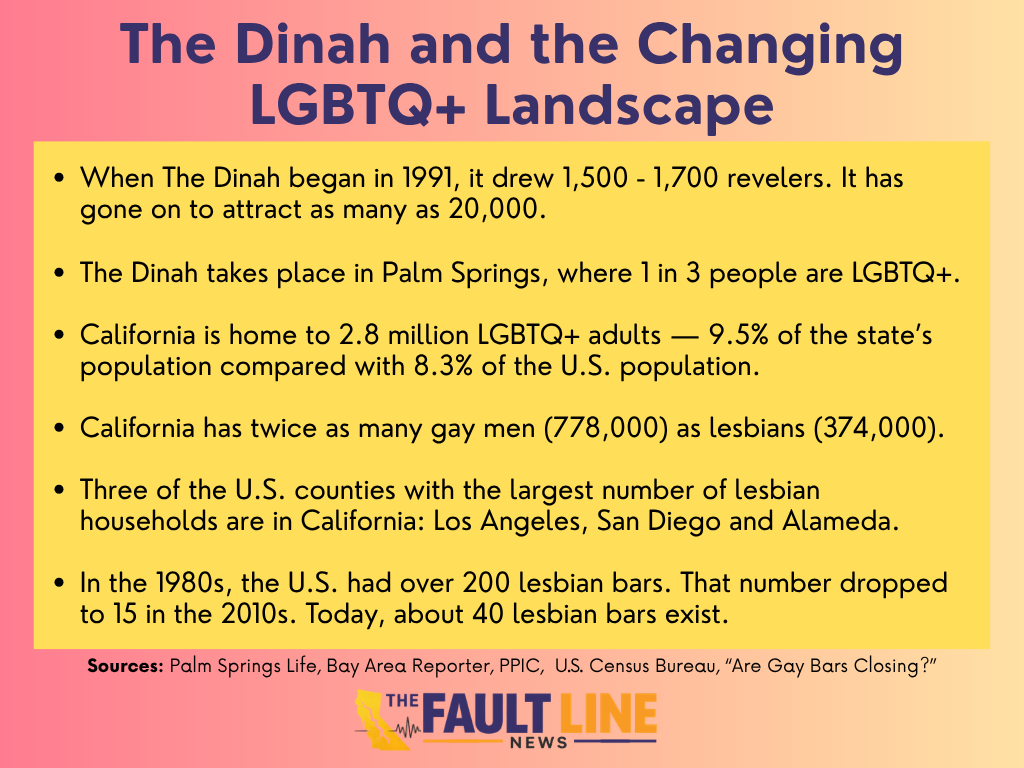
But growing up in Palm Springs, California, Ortega had no doubt the larger community would embrace their gender identity. The resort town in the Coachella Valley, about two hours east of Los Angeles, has one of the nation's highest concentrations of LGBTQ+ people — with at least a third of its 45,000 residents identifying as queer.
“If I ever had questions about how my family felt, I knew where my community and my hometown stood,” Ortega, 39, said. “Even in high school, the marching band would perform in the gay pride parade.”
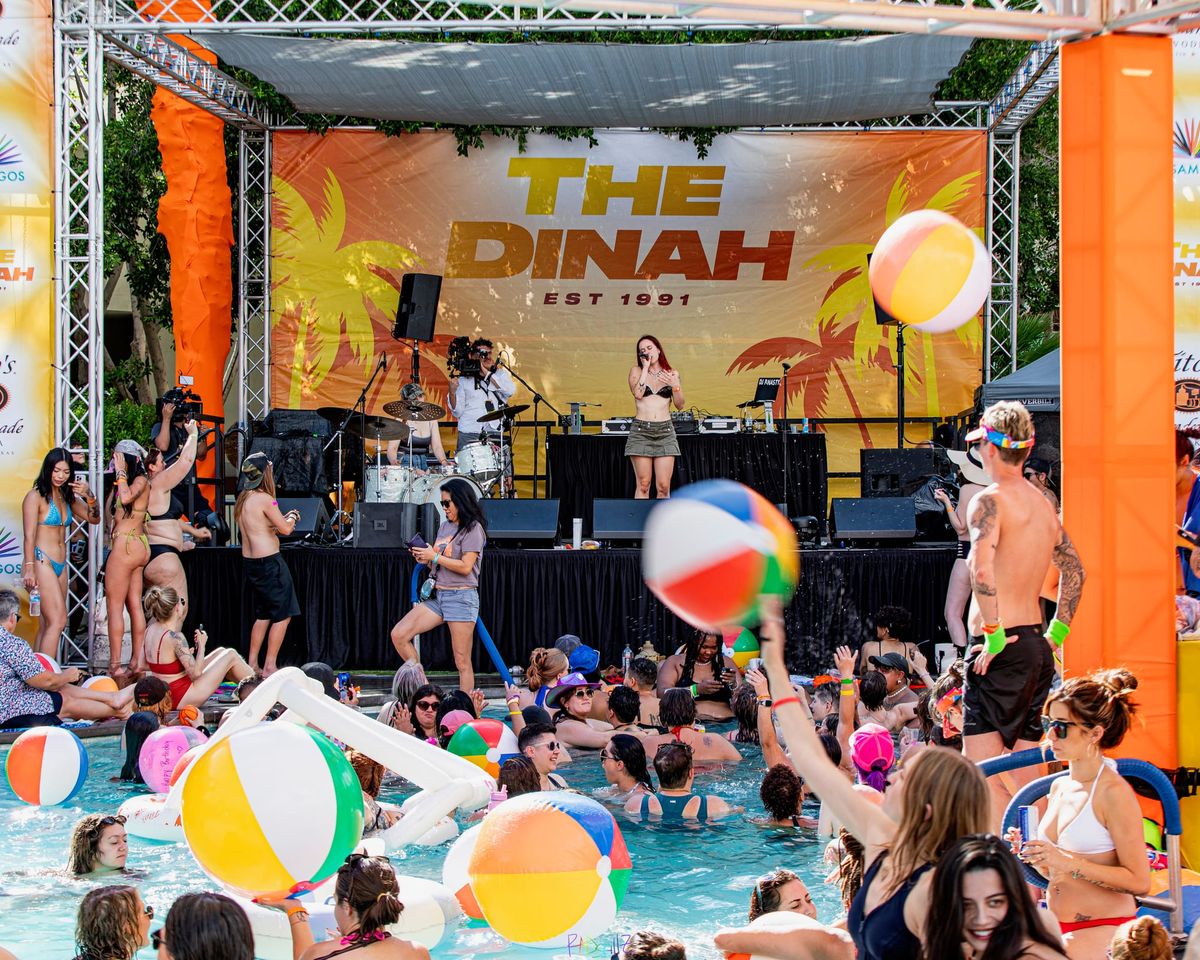
Since 1991, Palm Springs has also stood out for hosting The Dinah, the biggest festival for lesbians and queer women on earth. It has featured an eclectic mix of musical acts, including Pat Benatar, The Pussycat Dolls, Chaka Khan and Lady Gaga. One of its signature events, the L Word Pool Party at the Hilton Palm Springs, sees the hotel pool courtyard transformed into a sea of bikini-clad revelers dancing in the desert heat. Years before they were old enough to attend, just knowing The Dinah existed gave Ortega a sense of belonging.
“I get goosebumps when I talk about this because I always feel so privileged and blessed to have grown up in a community where all of my memories have been ones where the LGBTQ+ community is celebrated, where there's spaces for us,” said Ortega, now a board member of the LGBTQ+ History & Archives of the Desert, which documents the Coachella Valley's queer past.
As The Dinah marks its 35th anniversary — along with a change in ownership — the history of the event is front of mind this year. Gathering spaces for lesbians, particularly bars, have plummeted nationwide since the 1980s, though the numbers have started slowly rising again. Communities known for being LGBTQ+ friendly — whether West Hollywood near Los Angeles or the Castro District in San Francisco — cater more to gay men than to lesbians. The problem persists in Greater Palm Springs, which has a dozen resorts for gay men but no resorts or bars for lesbians, with Casitas Laquita resort and Delilah's Bar shuttering their doors a decade or more ago.
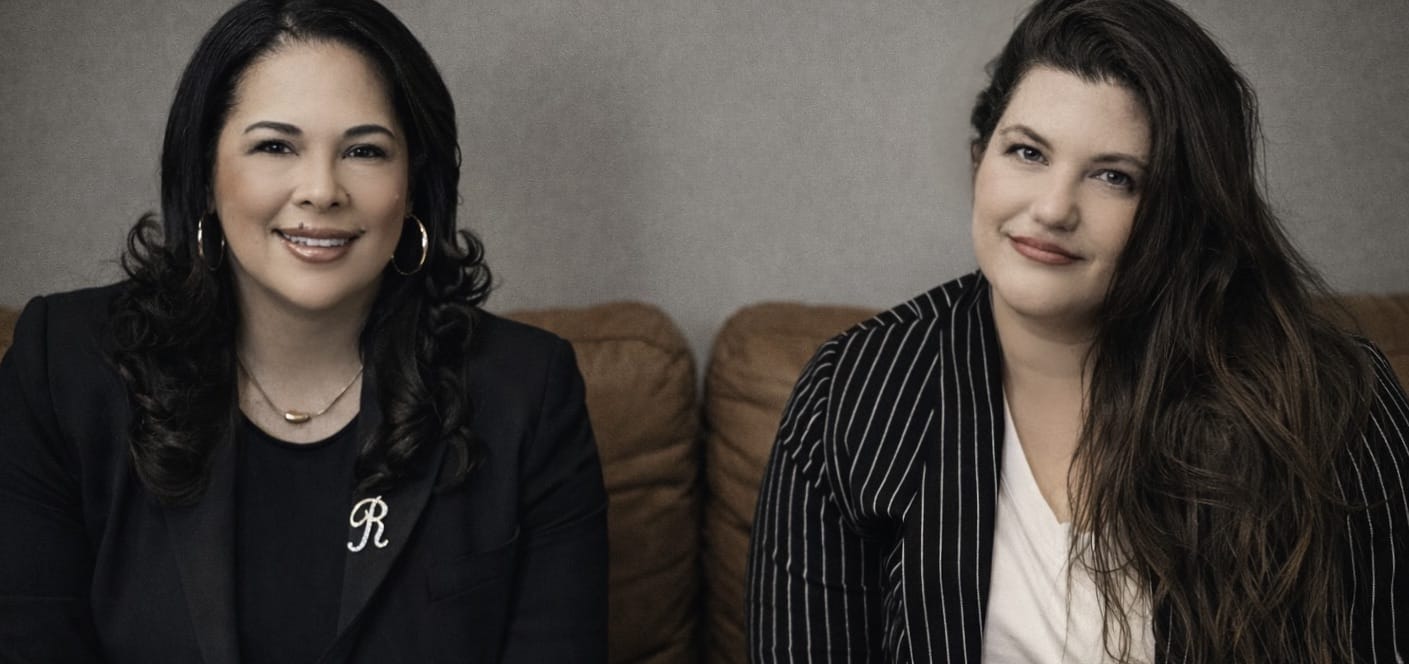
The Dinah, however, has served as a consistent space for lesbians and gender-expansive people to connect and experience joy. Yet the 2026 event, which will take place from Sept. 30-Oct. 4, almost didn’t happen. Founder Mariah Hanson announced last year that she was retiring without immediate successors to organize the festival. Enter Bella Barkow and Rose Garcia. They launched BellaRose Productions to run the event, which they formally acquired early this year.
"It was important to Rose and I, especially with everything that's happening in the world, to keep this event alive and strong and continuing,” Barkow said. “Having spaces where you can unwind, where you can be around people who are like you, who you feel comfortable with — it's very important to have those safe spaces, especially now more than ever."

Keeping The Dinah alive isn't just about preserving an annual party — it is about protecting a decades-old lifeline. When the festival first launched in the early 1990s, the cultural and political landscape offered far fewer safe harbors. The census recorded just 63,787 lesbian households, compared with 734,730 today. Ellen DeGeneres’ landmark coming-out episode was still six years away, and Palm Springs was run by its last Republican mayor, Sonny Bono, who would later oppose marriage equality in Congress.
In that hostile climate three decades ago, Mariah Hanson coordinated the first formal Dinah, drawing a crowd of over 1,500 lesbians to the Palm Springs Art Museum. The event reportedly took a dramatic turn when partygoers climbed to the museum roof and lifted their shirts, prompting the museum’s security guards to try to apprehend them.
The festival’s unofficial roots, however, date back to the 1980s when dozens of queer women headed to Palm Springs for the professional women’s golf tournament started by Dinah Shore, the late singer and actress. Hanson, who began organizing parties as a college student, noticed the trend and thought the golf contest marked the perfect time to hold a massive sapphic celebration.
In the years that followed, she helped sustain the festival through shifts in the economy and the queer community thanks to her connections to influential stakeholders, according to sociologist Sara Collas, an associate teaching professor at Ball State University who has studied lesbian party scenes for 27 years.
“She formed key relationships with different entities,” Collas said. “It’s not only about Mariah creating a lesbian party scene. She had to create rapport and relationships with businesses and hotels and the security people near Palm Springs.”
But when Hanson announced that she was retiring last year, fears mounted that her institutional knowledge would be lost after her departure. Dinah enthusiasts wondered if the festival would take a gap year or, worse, disappear entirely. They didn’t foresee that Barkow and Garcia, both of whom have long ties to The Dinah, would step in as organizers.
Barkow began working for The Dinah eight years ago, starting as a pool party stage manager before becoming operations manager. Garcia hosted the event for over a decade and ran one of Los Angeles' biggest lesbian parties, Fantasy Fridays. Still, when they became the festival's new owners the thought of putting it all together was daunting.
“We looked at each other and I was like, ‘All right, Bella, can we do this? Logistically, can we physically do this?’” Garcia recalled. “And Bella's like, ‘Girl, I can put together a stage for a festival in like two days. We can do it.’”
The timeline was grueling — 15-hour days and 4 a.m. phone calls. But the duo was determined that the event wouldn’t skip a year, particularly during a milestone anniversary.
Garcia is grateful that Hanson entrusted the event to them.
"She could have gone for the big dollars and sold it to a big corporation," Garcia said. “But this is her life's work. Thirty-five years, and it's her legacy. When Bella and I decided to come together to take this on, I think she just felt that it was being passed along to safe hands.”
Describing The Dinah for those who have never attended, Garcia landed on half-music festival, half-homecoming. “You hear so many different adjectives about The Dinah. It's a lesbian Coachella, it's this, it's that," she said. “But I think the heart of it is this place where you can connect with so many people from all over the country and the world.”
The Dinah 2026 features a musical lineup that spans generations and genres. Pop artist Hayley Kiyoko will headline the event, rounded out by musical acts including ’90s rapper Da Brat, alt-rock band The Aces and British R&B singer Sasha Keable.
Apart from the musical lineup, Barkow and Garcia have added a “singles and solos” event — a free social hour for ticket holders who are single, traveling alone or just looking to meet new people.
“We think of it like summer camp,” Barkow said. “Every time I go to Dinah, I leave with 100 new friends, and I'm like, ‘Yay! I'll see y’all next year.’ We wanted to expand on that.”
When longtime Dinah attendees reflected on their first visits to the event, one word came up repeatedly: “magical.”
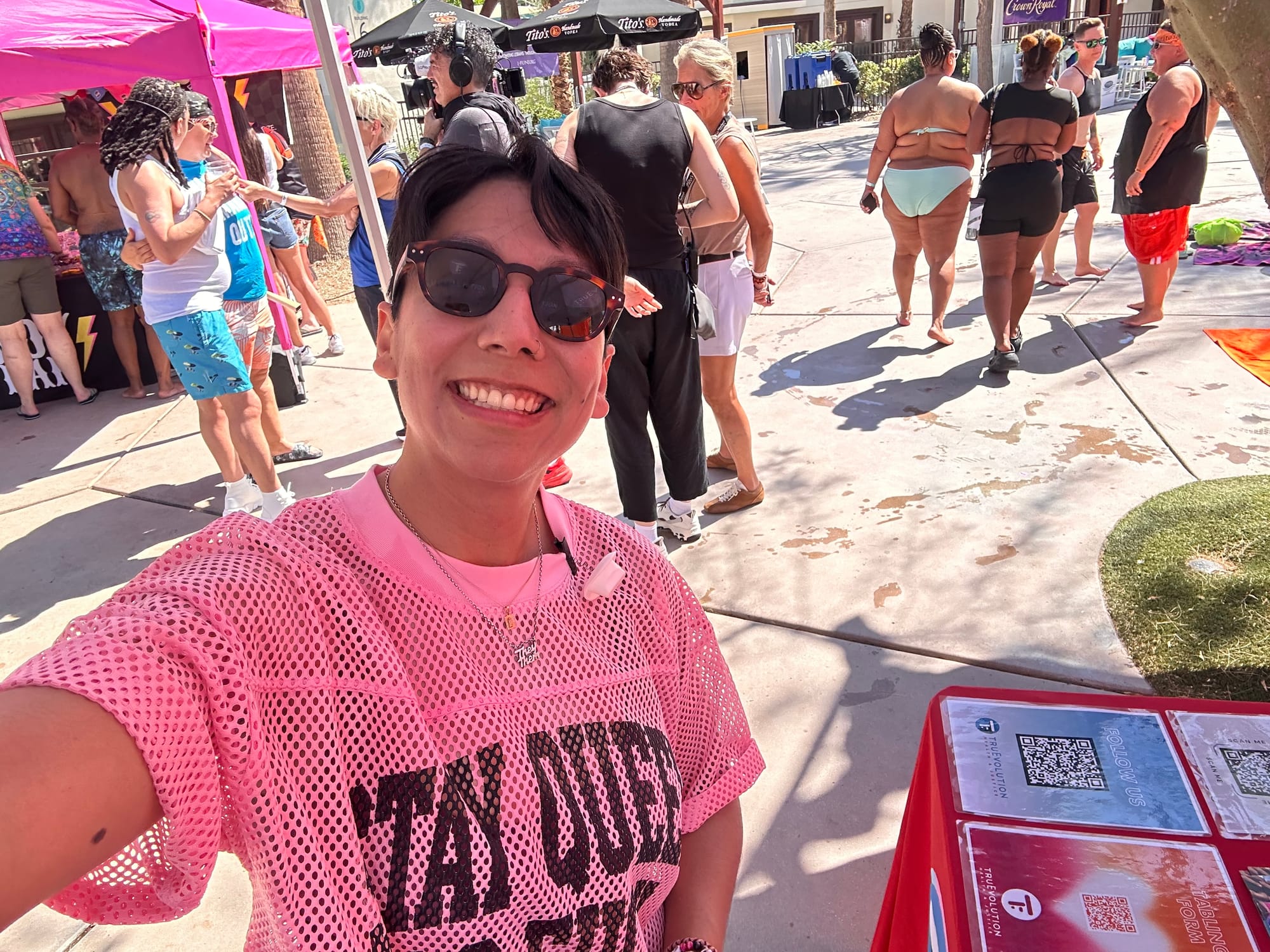
For Lex Ortega, that year was 2010. By then, they had attended the Coachella Valley Music & Arts Festival in nearby Indio several times but never The Dinah. Finally attending the latter event left Ortega overwhelmed.
“There's just something so magical and special about being in a place that centers lesbian people, sapphic people,” said Ortega, whose partner identifies as a lesbian woman.
Meg Ten Eyck, who runs the queer travel media company EveryQueer and chairs the International LGBTQ+ Travel Association's board, first attended The Dinah 16 years ago as well. She traveled with a group of friends from New York to Palm Springs.
“Wow, this is more lesbians than I have ever seen in my life in one place,” Ten Eyck remembered thinking. “And there was something really magical about that because we just didn't have those spaces. Even to this day, lesbian bars tend to be very small, very cramped, very underfunded — so I think that year it was something like 20,000 lesbians. Just an astronomical amount gathering in one place was inconceivable.”
Now 39, Ten Eyck first learned about The Dinah the way many women of her generation did — through Showtime’s “The L Word.” The drama chronicled the lives of queer women in West Hollywood. During a first-season episode, the women travel to Palm Springs for the festival.
“‘The L Word’ was a global phenomenon for queer women,” Ten Eyck said. “It was the first piece of media that was mass produced that was created for us and by us. There was an entire episode that was filmed at Dinah Shore.”
Called “Looking Back,” that episode aired over a decade after the start of The Dinah, securing the festival’s place in popular culture. But The Dinah’s connection to “The L Word” didn’t end when the series did. Garcia, the new co-owner, starred in “The Real L Word,” the reality TV version of the drama. It ran on Showtime from 2010 to 2012.
That show was filled with high drama — messy breakups, love triangles and personality conflicts. Ten Eyck worries that outsiders might have a similar view of The Dinah, one skewed by racy pool party photos that don't tell the full story.
“People who haven't been think that Dinah is just this raging, orgy lesbian spring break kind of vibe," she said. "It's more like a choose-your-own-adventure kind of vibe. If you want it to be that big drunk lesbian pool party, you can totally have that experience. And if you want it to be a little bit of a quieter experience, there are other events.”
Collas, who has presented a photo-ethnography of The Dinah at a sociology conference, said the event can tip into “hypersexual” territory but was careful not to moralize. She frames it as a consequence of structural exclusion.
"I'm not saying that's bad, not at all," she said. "We just may not be able to have the same spaces as heterosexuals who could maybe meet up at the library or the grocery store, so those lesbian spaces become these hypersexual events.”
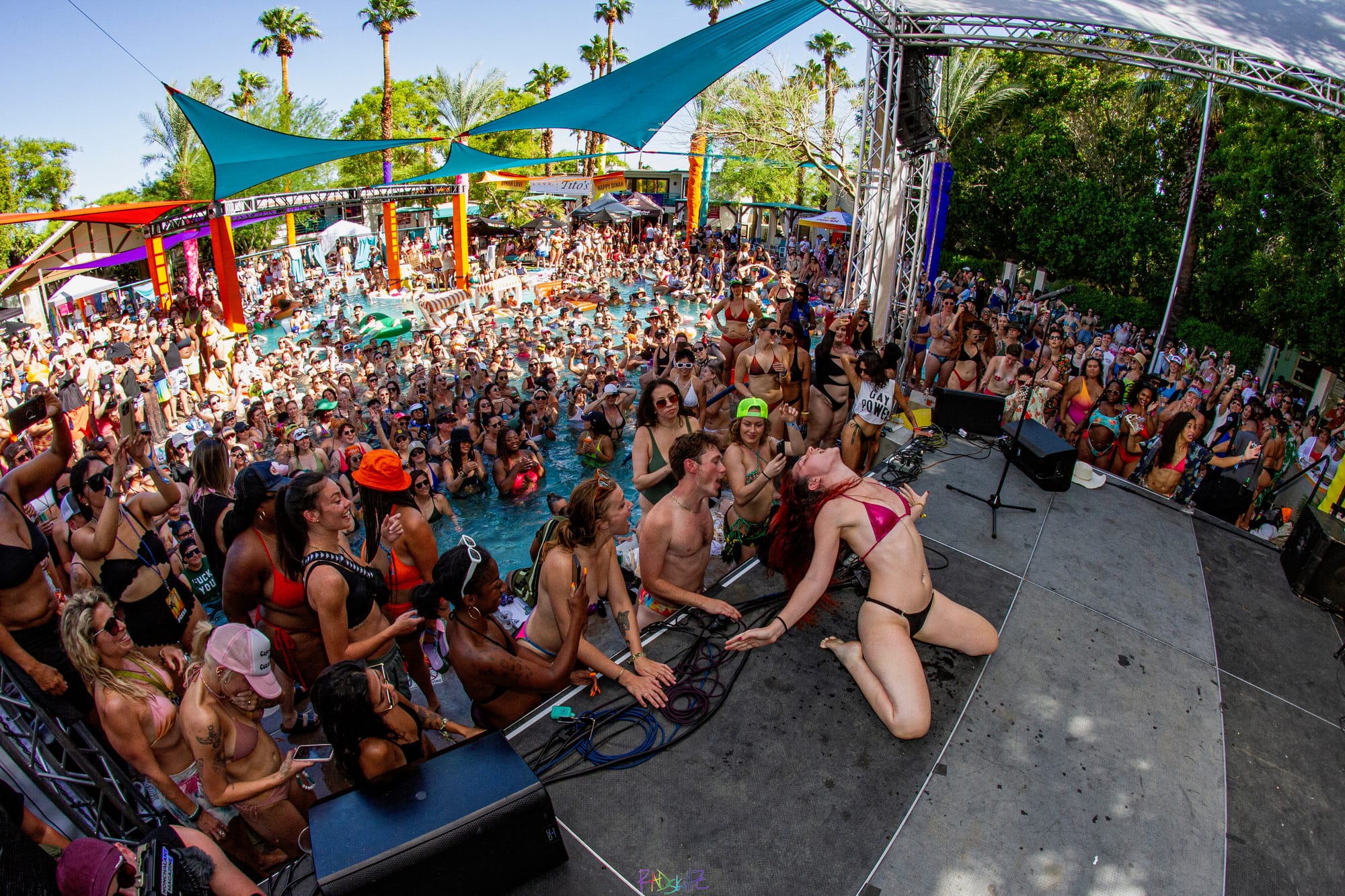
For all its tensions, The Dinah has managed to thrive year after year. The festival’s location has no doubt contributed to its success. For generations, Palm Springs has been a refuge for entertainers and LGBTQ+ people, in part because its proximity to Los Angeles offered privacy.
"That was even more so during the early years of the AIDS epidemic with additional care and resources here," Ortega said.
By the late 1980s and early 1990s, Palm Springs had begun to flourish as a gay destination. In 2017, it became the first city in the world to elect an entirely LGBTQ+ city council.
“All of these small moments are a part of the current reason why people are drawn to Palm Springs, why the queer community is drawn to Palm Springs,” Ortega said.
Greggor Mattson, a professor of sociology at Oberlin College, said gay resort towns such as Palm Springs have historically helped advance LGBTQ+ communities.
"Because they attract so many LGBTQ tourists, things are possible there that are otherwise only possible in larger cities," said Mattson, author of “Who Needs Gay Bars?”
Ten Eyck pointed out, however, that Palm Springs has historically centered gay men.
“Most of the community spaces and bars and venues that are in Palm Springs are created with gay men at the core,” she said. “While other letters of the alphabet community can certainly go to Palm Springs, have a wonderful trip, really enjoy their time, it is not a destination that is necessarily created with us in mind first — which is what makes Dinah particularly interesting.”
The Dinah's 35-year run is all the more remarkable given the decline of lesbian gathering spaces nationwide. Mattson has researched the collapse: from more than 200 lesbian bars in the late 1980s to fewer than 20 by the late 2010s. Today, that figure has risen to 40.
“The decline in lesbian bars between 1987 and 1992 happens at a time when there's a dramatic increase in the number of gay bars that serve women and men together,” Mattson said. “We can't tell from the data whether previously lesbian bars were being invaded by men or whether gay men's bars were responding to the AIDS activism, where lesbians really provided a lot of the care work and the political organizing.”
What researchers do know is that economics played a major role. Women-owned businesses have historically had less access to capital, and women earn less than men. Lesbians also have more caregiving responsibilities, making it harder to run late-night businesses.
“They're much more likely to have children,” Mattson said. “They're much more likely to be responsible for ill parents.”
Those disparities don't disappear once inside The Dinah. Collas noted that the festival offers VIP tickets that allow purchasers to mingle in separate spaces and skip lines. Generally, she said, “You gotta have money to be going to Dinah. The tickets are expensive. The hotel lodging is expensive. The drinks are expensive.”
But Collas was quick to complicate her own critique. During one of her multiple trips to The Dinah, she asked a VIP ticket holder why she'd spent so much to attend. The woman quipped, “Because I've worked hard in my life, and I deserve it.”
Collas' response? “Hell yeah! OK, now I see.”
While Collas recognizes class divisions at the festival, Ten Eyck points to a problem external to The Dinah: the people who blame queer women themselves for the decline of lesbian spaces. She has visited every remaining lesbian bar in the world for her content series.
“A lot of the reasons that lesbian bars have closed is because of the financial inequities that female founders and entrepreneurs face,” Ten Eyck said. “This is actually a systemic issue and shouldn't fall on the individual members of our community.”
While a shadow of their numbers decades ago, the few dozen lesbian bars that exist today have managed to do so by being explicitly inclusive, a nonnegotiable for the younger generation.
“What’s interesting about the upswing in lesbian bars is the way that they are all accepting of everybody," Mattson said. “There’s been a shift between perhaps classic lesbian bars from the ’80s that only wanted cis lesbians in them to lesbian-owned bars that often identify as queer or everybody bars to signal a welcoming of transgender patrons and anyone else who supports the idea of a women-forward space.”
The Dinah has embraced that ethos. The promotional language for the event has evolved to include “queer women” instead of lesbians in particular. The festival also welcomes trans and nonbinary attendees like Ortega. Its evolution reflects a change in how younger queer people describe themselves. Where earlier generations used “lesbian” as both an identity and a political label, Gen Z and young millennials have increasingly characterized themselves as queer or pansexual, finding the term “lesbian” too narrow.
Collas has watched that shift unfold as a university professor. “I think lesbians have gotten a bad rap, and some of that bad rap is from people that have no clue about lesbian history,” she said. “But I know language changes, terms change.”
For Barkow and Garcia, linguistic shifts aren’t a threat to the festival. They are a reason to be explicit about who's welcome. Garcia identifies as a lesbian, but she credited Barkow with pushing for language that describes the festival as a space for “queer women.”
“We're trying to be more expansive, gender expansive, and incorporate a lot of the things that are important to the younger generation, while also keeping true to all age cohorts," Barkow said. “One of the things about The Dinah that makes it so beautiful is you see people who are there from 21 to 81, and they're all hanging out together.”
As The Dinah marks its 35th anniversary, the political climate for queer people remains fraught, with over 500 anti-LGBTQ+ bills introduced in state legislatures in 2026 alone. Given this, Barkow views the festival as more than entertainment.
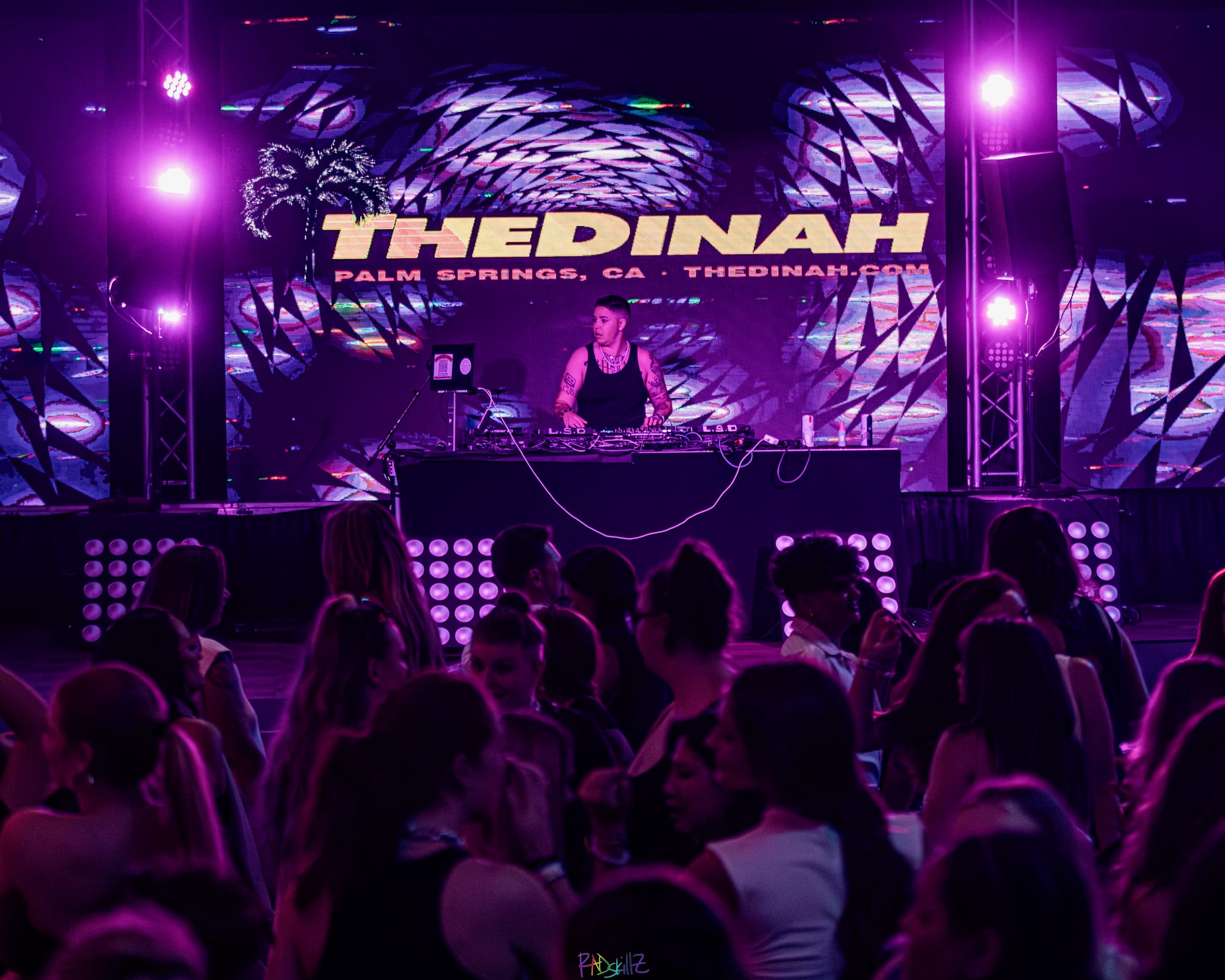
"Queer joy is resistance, and just being yourself is a form of resistance in this day and age," she said. "We really want The Dinah to be a place where you can almost step away from all that, where you can come and be in community. Just being ourselves, being able to be out and open and proud, is a testament, is a statement.”
The Dinah's endurance feels personal to Ortega. Growing up in a community with dedicated spaces for queer people made them feel valued.
“It does something for your psyche," they said. “I wish everyone had an experience like that.”
This article — produced by The Fault Line News — is available to republish for free. For republishing inquiries, please contact us.