A Theoretical Physicist from L.A.’s Eastside on ‘The Edge of Space-Time’
In her new book, Chanda Prescod-Weinstein explores the cosmos, climate change and who gets to go to the moon — with doses of “Alice in Wonderland” and Dodgers baseball, too.
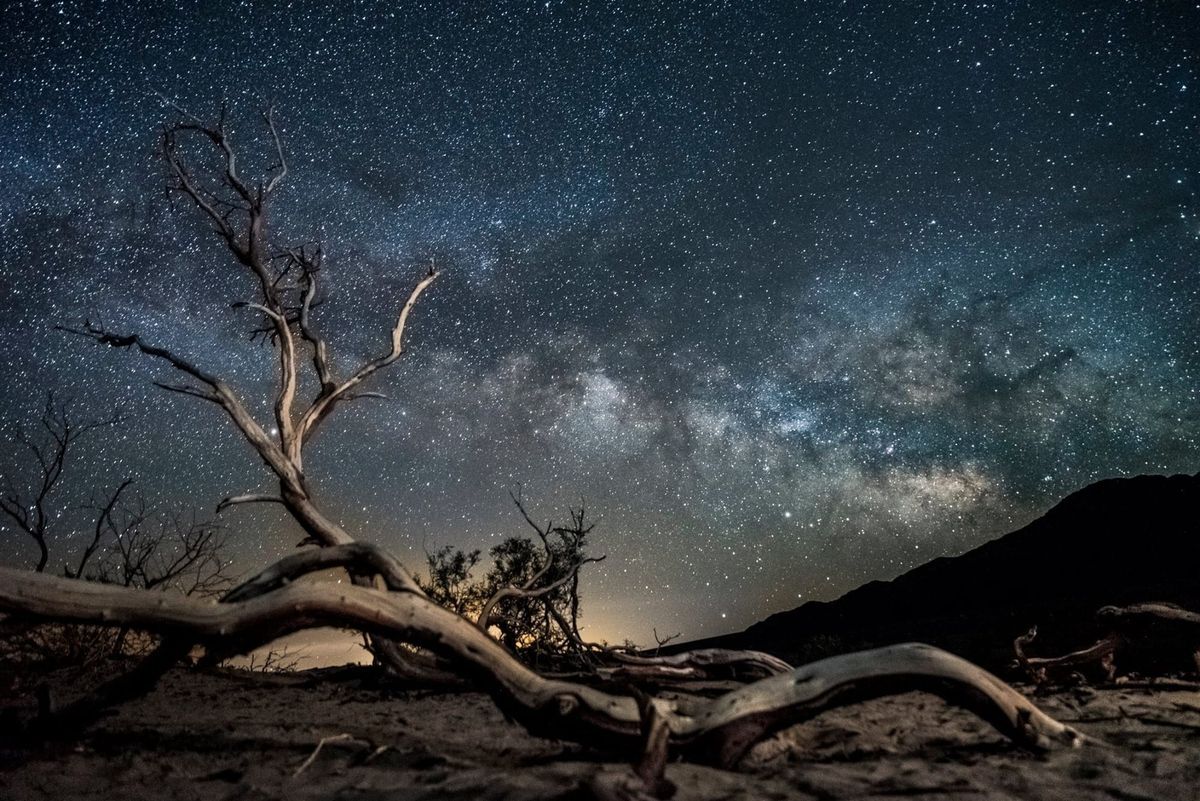
“Our home has not completely burned to the ground — yet.”
In her new book, “The Edge of Space-Time: Particles, Poetry, and the Cosmic Dream Boogie,” theoretical physicist Chanda Prescod-Weinstein makes that stark observation about Earth before cautioning: “Well, not everyone’s.” Californians, she notes, already understand the toll climate change can take.
As she wrote the book — which invites readers to explore humanity’s connection to the cosmos through space-time, dark energy, black holes and quantum gravity — her hometown of Los Angeles experienced its most destructive wildfire ever: 2025's Palisades Fire.
The rise in climate-driven wildfires, she argues, is just one reason humans should focus on salvaging our own planet before resettling — and likely destroying — another, be it Mars in our solar system or Proxima Centauri b, Earth’s nearest exoplanet.
As “The Edge of Space-Time” debuted on April 7, the public was hyper-focused on humanity going boldly beyond our planet. Three days later, on April 10, Artemis II splashed down off the coast of San Diego. It was the first crewed mission to reach the moon in over 50 years.
The crew included pilot Victor Glover. Born in Pomona, 30 miles east of downtown L.A., he's one of an estimated 29 astronauts with a California birthplace. But in the wider culture, the sheer number of spacefarers with Golden State origins is often overlooked. In a divisive political climate, California is more likely to be caricatured as a land of vapid Hollywood liberals than recognized for its history of space pioneers and scientific titans.
Well before the coastal elite stereotype, however, California had another reputation entirely: It was known for being a little cosmic.
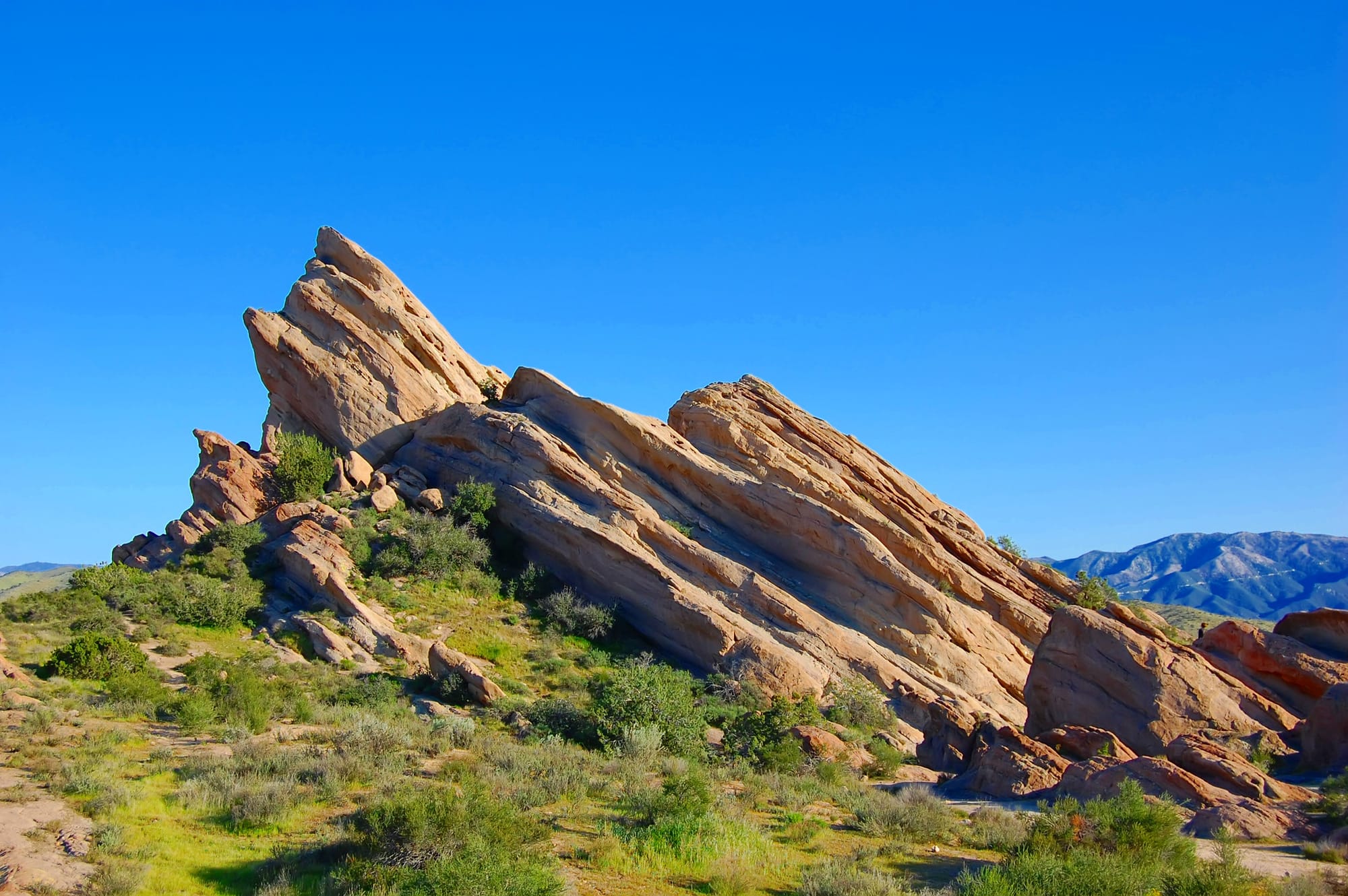
Its landscapes — especially the jagged sandstone slabs of Vasquez Rocks — have doubled as other worlds in classic sci-fi productions. Former Gov. Jerry Brown could never shake the "Governor Moonbeam" nickname that Chicago columnist Mike Royko pinned on him in 1976, a disapproving nod to the state's previous counterculture era.
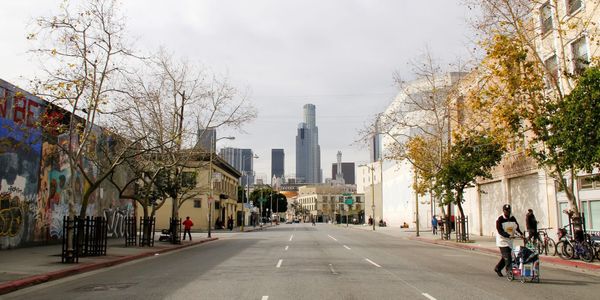
Prescod-Weinstein, now an associate professor of physics and astronomy at the University of New Hampshire, was born six years later in Los Angeles' working-class, predominantly Latine Eastside. In “The Edge of Space-Time,” she situates the reader in her childhood neighborhood.
"Where are you?" she asks. "El Sereno, Los Angeles, California, United States, North America, Earth, Solar System, outer arm of the Milky Way, Local Galactic Group, Universe."
In El Sereno, she grew up just miles from NASA's Jet Propulsion Laboratory operated by the California Institute of Technology in Pasadena.
A self-described "child of the space shuttle era," she became fascinated with the IMAX film “To Fly!” at the California Science Museum, "where it brought me past Mars, past Jupiter and its moons, past Saturn and beyond," she writes.
As much as “The Edge of Space-Time” is a book about the universe, it's a work rooted in California. Even Prescod-Weinstein’s explanations of cosmic phenomena draw from home. To explain how massive objects like the sun bend space-time, she describes a baseball striking a hanging quilt — an analogy inspired by her love of the Los Angeles Dodgers.
The Fault Line News spoke with Prescod-Weinstein about how her California upbringing shaped her path to cosmology — and why the vastness of the universe should inspire and not frighten us.
This interview has been edited for clarity and brevity.
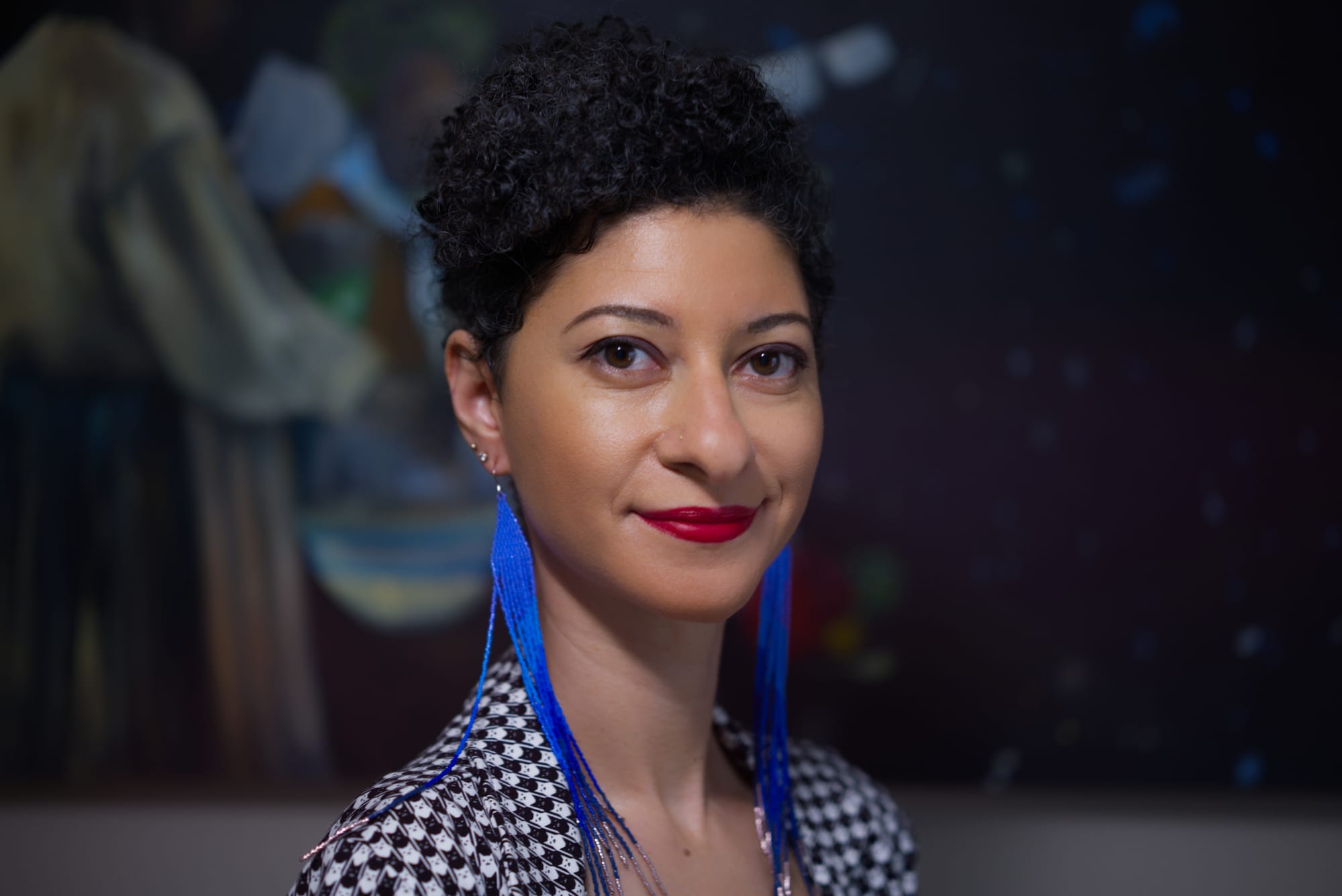
Nadra Nittle: I was in El Sereno when I read the passage where you pinpoint the exact location of that neighborhood in the universe — a pretty uncanny experience, and one that only a select group of readers will have. Why was it important to namecheck your childhood neighborhood so precisely?
Chanda Prescod-Weinstein: I think for the rest of my life I will always be writing to El Sereno. I was literally born on the living room floor in the house I grew up in in El Sereno. It is the place that made me — the sounds, the visuals, the community, the people. Also, a lot of the figures in the book were drawn by Sharifah Zainab Williams, and she and I met because her family moved in next door to mine when we were five.
NN: El Sereno is very close to some of the world’s preeminent scientific institutions — Caltech, JPL, Griffith Park Observatory. Did growing up in the backdrop of these places influence you in any way?
CPW: Caltech added to the sheen of Pasadena for me, which was like, if you made it scientifically, you got to live in Pasadena. My dad's biological father had been a machine worker his entire life. He left high school early to pay for his younger sister's opera lessons because she showed promise, and she actually went on to be a globe-trotting opera singer. So on a family scale, it was a smart choice, but it also meant that his educational opportunities were curtailed. He was a really big Dodgers fan, and he was also a total gadget geek who loved all things computer. From a very, very early age, it was clear that he really wanted me to go to Caltech. That was the plan. So it became this place of arrival in my mind.
I committed to Harvard before I got into Caltech because I had convinced myself that I had to move to the East Coast. Then I got into Caltech, and I got a full ride, and I sat down on the floor and I cried. By then, my grandfather had been gone for 10 years, and I was like, “Oh God, I messed up the plan. I'm such a disappointment. I can't believe I did this.” And my mom looked at me like I was just totally out of my mind. She was like, “Chanda, your grandfather grew up this working-class Jewish kid in Brooklyn. It never occurred to him that his granddaughter could go to Harvard.” But I think for those of us who are local, Caltech was the pinnacle.
NN: You write that your mother — journalist and activist Margaret Prescod — encouraged you to take an interest in space, in part, because it is infinitely greater than any problems we face in society. How has this mindset helped you and how might it help others during trying times?
CPW: I think a lot about when I first got to Harvard. There are so many kids from the Los Angeles area and California more broadly at Harvard. So I would tell people I'm from Los Angeles, and they'd say, “Oh, what part?” And I would say I'm from East L.A., and people who weren't even from California would be like, “Oh, isn't that the bad part?” People would just let that come out of their mouths. It's true that occasionally the cops would be chasing a gang member through my backyard or whatever, and we were scared of the police, but I hadn't experienced El Sereno as a bad place. I had experienced it as this beautiful place with a great community. So I think there's a way in which to recognize within our communities where that expansiveness and bigness already is.
I envisioned “The Edge of Space-Time” as being kind of in that tradition of looking for whimsy, looking for joy, looking for laughter, looking for fun and recognizing that we have to be willing to keep doing that. A piece of that is our relationship to physics, our relationship to the universe. You need to know that your relationship to the universe is more important than your relationship to Donald Trump.
"You need to know that your relationship to the universe is more important than your relationship to Donald Trump."
It doesn't always feel that way, right? He might have more immediate political power over you than something else in the universe, but you choose how you will relate with the rest of the cosmos, not him.
NN: You argue that Californians are keenly aware of the toll climate change is taking on our planet because of the devastating wildfires we've experienced. You mention how the late novelist Octavia Butler, a Pasadenan, foresaw some of these catastrophes. What was it like for you to write a draft of this book during the Palisades and Eaton fires?
CPW: I was in Santa Barbara the entire time, and there was this kind of strangeness because the wind was going north to south, so we weren't getting any of the smoke. Here I am sitting by the ocean at the Kavli Institute for Theoretical Physics at UC Santa Barbara, and I'm totally not being directly impacted by it. For me, that felt very surreal.
I grew up in smoggy Southern California. We had terrible air quality. I grew up next to a freeway on top of growing up in an area that was just smoggy. So I didn't grow up with the fires as they are now, but I grew up already with the sense that catastrophe was in the air and California was at risk. Like if you grew up in Los Angeles, you know something about the water situation, the water wars. I spent part of my time in graduate school at UC Santa Cruz, so I did a lot of driving back and forth between Santa Cruz and Los Angeles. That involved driving through the Central Valley and [Interstate 5] a lot. So you're seeing all of this land that used to be full of water that's completely dried out, and there's this dirt and dust blowing all over. So I think part of growing up with the land in Los Angeles is an acute awareness of the fragility of the ecosystem because it is already radically altered from what it was when the colonizers first arrived.
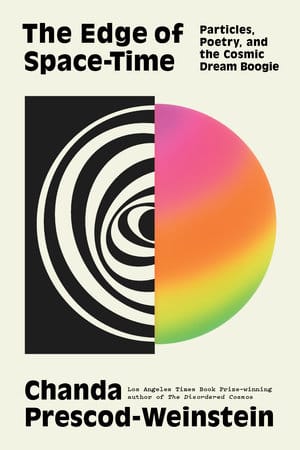
NN: You worried that people wouldn't care about a book on the cosmos — even after your first book, “The Disordered Cosmos,” won the Los Angeles Times Book Prize. Then “The Edge of Space-Time” debuted the same week the Artemis II mission captured the world's attention. Do you think that timing sparked more interest in your book — and more broadly, does it feel like people are more curious about space right now than usual?
CPW: A lot of the media around Artemis II has been basically just rehashing press releases from NASA instead of doing genuine critical analysis of the science policy context. This has been a failure of science journalism that really needs to be unpacked, but the media is not looking for people like me because I'm going to say the astronauts are brave, and I'm also going to say the spaceship they're flying in was made by Lockheed Martin, mostly, and Lockheed Martin makes weapons that kill people in Palestine. And a lot of the science journalism apparatus, to the extent that it still exists, does not understand it as their mission to report to the public that the laser technology that allowed us to see that Nutella container flying across the spacecraft, which was pretty funny and amazing, was developed by NASA and the Department of Defense. They say it was developed by NASA and MIT's Lincoln Lab. They don't say that MIT gets a bunch of money to manage that lab from the Department of Defense.
I will say that going into the release of this book, I had an enormous amount of anxiety about whether, in this political moment, anybody would care about a book that's like, “Hey, quantum field theory is cool. Let me tell you about it.” I also want to tell you, “Thinking about quantum field theory for the time that you spend reading my book is making your brain better and might make you a better citizen.” So there is a politics to it. There's also a whimsy to it, which is why there's lots of “Alice in Wonderland” in the book, and I was not sure that people would accept that from me, in particular, and especially in this political moment where everything's very, very serious.
NN: You describe how in 1961, while serving as head of the United States Information Agency, Edward R. Murrow asked NASA to send a person of color into space, but he was told that didn’t align with agency policy. Fast forward to early April, and Victor Glover, a Black American, is piloting Artemis II around the moon. How much progress has NASA made since the Murrow era?
"The Edge of Space-Time" author Chanda Prescod-Weinstein discusses "Star Trek" star Nichelle Nichols' recruitment efforts for NASA.
CPW: I don't think that's as straightforward of a thing as I would like it to be. It's obvious that there have been genuine transformations in how astronauts are selected, and that kind of outward segregation is no longer legal. Ed Dwight, who should have been the first Black astronaut, is still alive. [Dwight completed the Air Force’s aerospace research pilot training and was recommended to NASA as an astronaut candidate]. He has been asked to comment on Victor Glover's journey. I imagine it’s difficult for him to watch someone else live his dream deferred.
I'm also very aware of the work of Nichelle Nichols, who played Lt. Uhura on “Star Trek.” She was basically a brand ambassador for NASA for years who worked really hard to recruit the first women astronauts and the first men of color astronauts. So I'm very aware of that legacy when Ebony magazine declared in January 1967 that Nichelle Nichols was the first Negro astronaut — NBC color TV beats NASA — they were making a very pointed political analysis about the failure of the United States to live up to its democratic ideals, and that should be interpreted through the lens of the Cold War, when that application actually had some sharpness to it because the United States was obsessed with being like, “No, we’re the real democracy."
NN: The Mojave Desert, Vasquez Rocks — they've doubled as alien planets in so many films. Do you think California's actual landscape has inspired you?
CPW: As a “Star Trek” convention-attending “Star Trek” fan, I think a lot, especially these days, because the patterns of where things are filmed have changed so dramatically from my childhood to my adulthood. A lot of what I saw on television was physically familiar to me. There is this feeling that no matter how poor you are, if you're from Los Angeles, there's a way in which you feel like you're on top of the world because your culture is so part of global culture, and your geography is so part of global geography and the global imagination because so much filmmaking has historically happened in or around Los Angeles.
I brought up “Star Trek" because there's so many scenes where they're on an alien planet, and sometimes they're on a set, but sometimes they're just out in the desert, right? Or some sci-fi film or TV show will be like, “Look at these weird plants,” and it's a Joshua Tree. Anybody who's from around that Nevada-California line or who has been there recognizes the Joshua Tree or the cholla cactus, so I do think there is this kind of feeling that your scenery is part of the global public imagination. I do think there's a kind of pride that comes with that. I was very shaped by that. I never had the sense that my world was small. I always had the sense that my world was big.
NN: The rate at which the universe is expanding is accelerating. That’s a phenomenon that personally alarms me, but you offer a different take.
"The Edge of Space-Time" author Chanda Prescod-Weinstein discusses how exploring our connection to the cosmos can expand the human imagination.
CPW: I mean, it is happening, right? And it is a strange thing to try to imagine because we live such gravitationally-bound lives that it's hard to imagine the extremely gravitationally unbound. Gravitationally unbound is a good way to put it because from the point of view of general relativity, the acceleration, like the increase in the expansion, is a gravitational effect. It is a different gravitational effect than the one we live with on an everyday scale. But there's no physical threat to us. We still get to go about and live our lives. The value and understanding that space-time’s expansion is accelerating is that you know that that kind of fantastical thing actually can happen in our universe. I am a true believer that something happens to your brain when it is introduced to those kinds of possibilities. I think that's really a gift from the universe.
This article — produced by The Fault Line News — is available to republish for free. For republishing inquiries, please contact us.