The Drought Generation: They've Never Known a California Without Crisis
Climate change isn't a future threat for the state’s youngest residents — shaped by 25 years of fire and dryness. It's the weather of their lives.

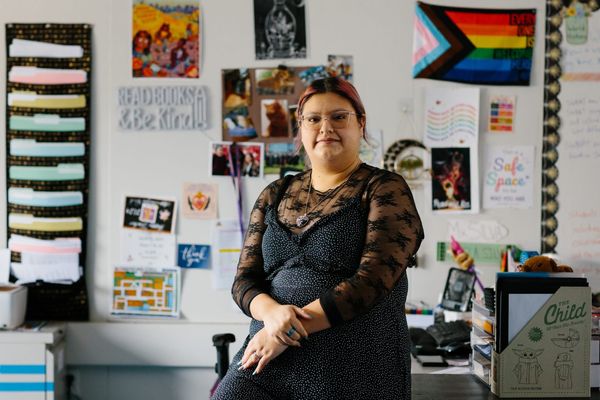
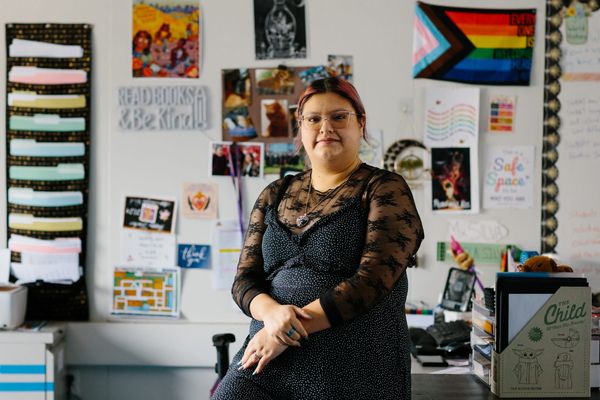
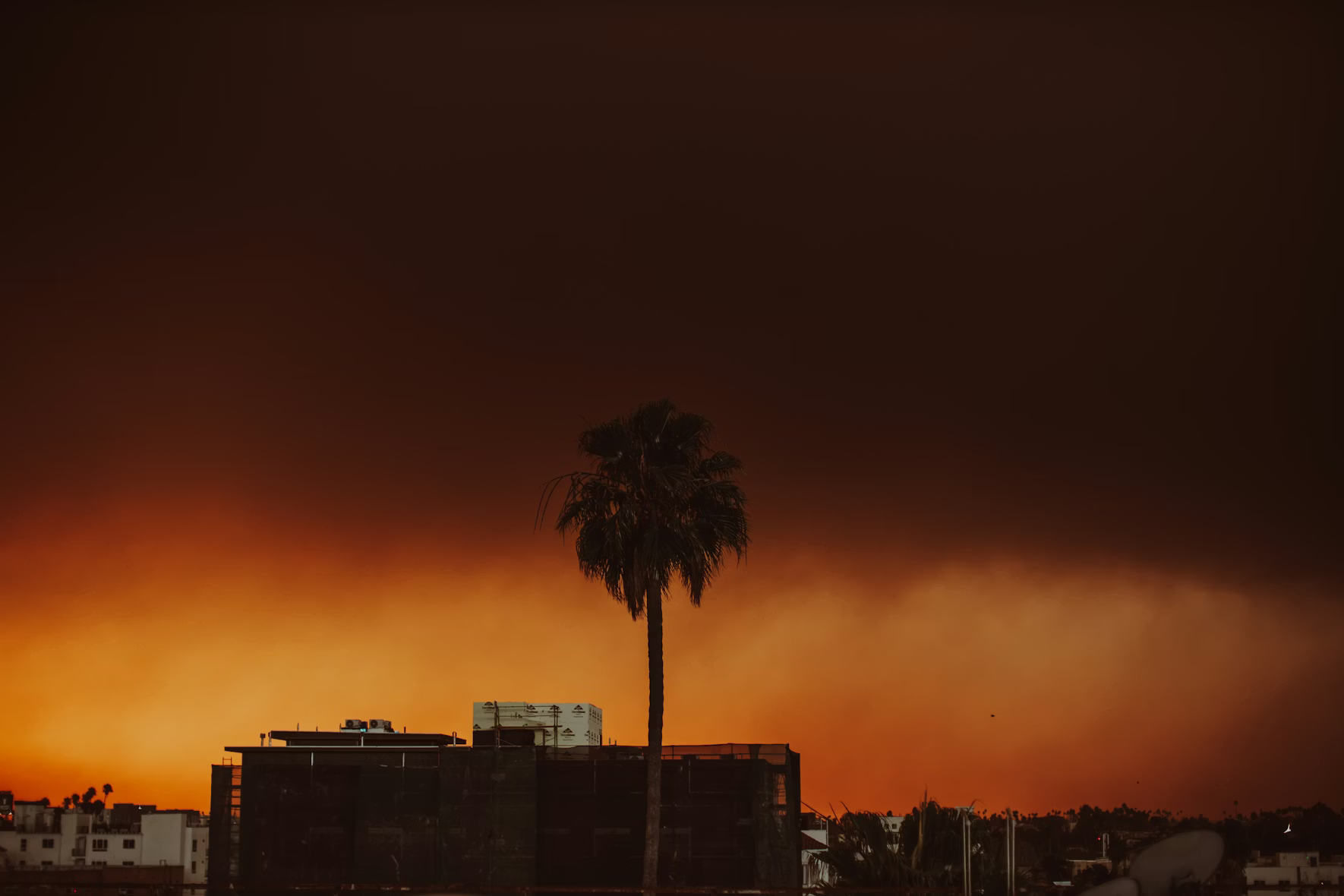
For Zara Ahsan, the tangerine smoke that fills the horizon and stings the lungs has become routine.
“A lot of apocalyptic sights are the ones that I grew up with,” Ahsan, 19, said. “The orange skies have come back many times in my childhood.”
Since 2000 — before the Oakland teen was born — 15 of California’s 20 largest wildfires have broken out. Calamities that elicit gasps from older people are just another Tuesday for Ahsan. “The fire season has always been a thing for me, so I guess the definition I have for ‘apocalyptic’ is different,” she said.
The image of fire in the sky so familiar to Ahsan coincides with one factor: drought. For 25 years, the state was officially parched. That prolonged dryness primed the landscape for catastrophe, turning forests into tinder and setting the stage for wildfires. Only in January 2026 did the United States Drought Monitor’s map reveal a completely drought-free state, closing a chapter that has shaped an entire group of young people.
Lifelong exposure to an environment in crisis gave rise to the Drought Generation — Californians 25 or younger for whom climate change is not a future threat but a formative condition. In reporting this story, young women repeatedly surfaced as organizers, advocates and caretakers within this demographic that has grown up breathing smoke, rationing water and evacuating from fires — experiences that shape how they choose their studies, careers and activism. With the next blaze always imminent, many also experience well-documented climate anxiety.
Nearly 60 percent of 16-to-25-year-olds are very or extremely worried about climate change, according to a 2021 study in The Lancet. About 85 percent are at least moderately concerned.
Ahsan captured their fears in her own words. “It feels really destabilizing at this period in life to be super uncertain about the future,” she said. “There’s multiple levels of anxiety: There's definitely the one of, ‘How long is this planet going to be around?’”

Ahsan never intended to be an activist. As a high school student, free pizza motivated her to attend her first meeting of Youth Vs Apocalypse (YVA), a youth-led climate justice organization based in the San Francisco Bay Area. But the group’s ethos kept her coming back. “It really centered students and students of color at the front of their organizing,” Ahsan, who is South Asian American, said. “It was just a really cool space that talked about environmental activism and climate justice in a way that seemed really new to me.”
Now a sophomore physics major at the University of California, Los Angeles (UCLA), Ahsan plans to pursue a career in clean energy. She also serves on the board of YVA, where her involvement quickly shifted from after-school meetings to statewide campaigns, including one focused on the California Teachers Association (CTA).
“We were trying to get the CTA to endorse a bill that would mandate fossil divestment from CalSTRS, which is the teacher's pension,” Ahsan recalled. She became the coordinator of that campaign for two years, balancing it with high school.
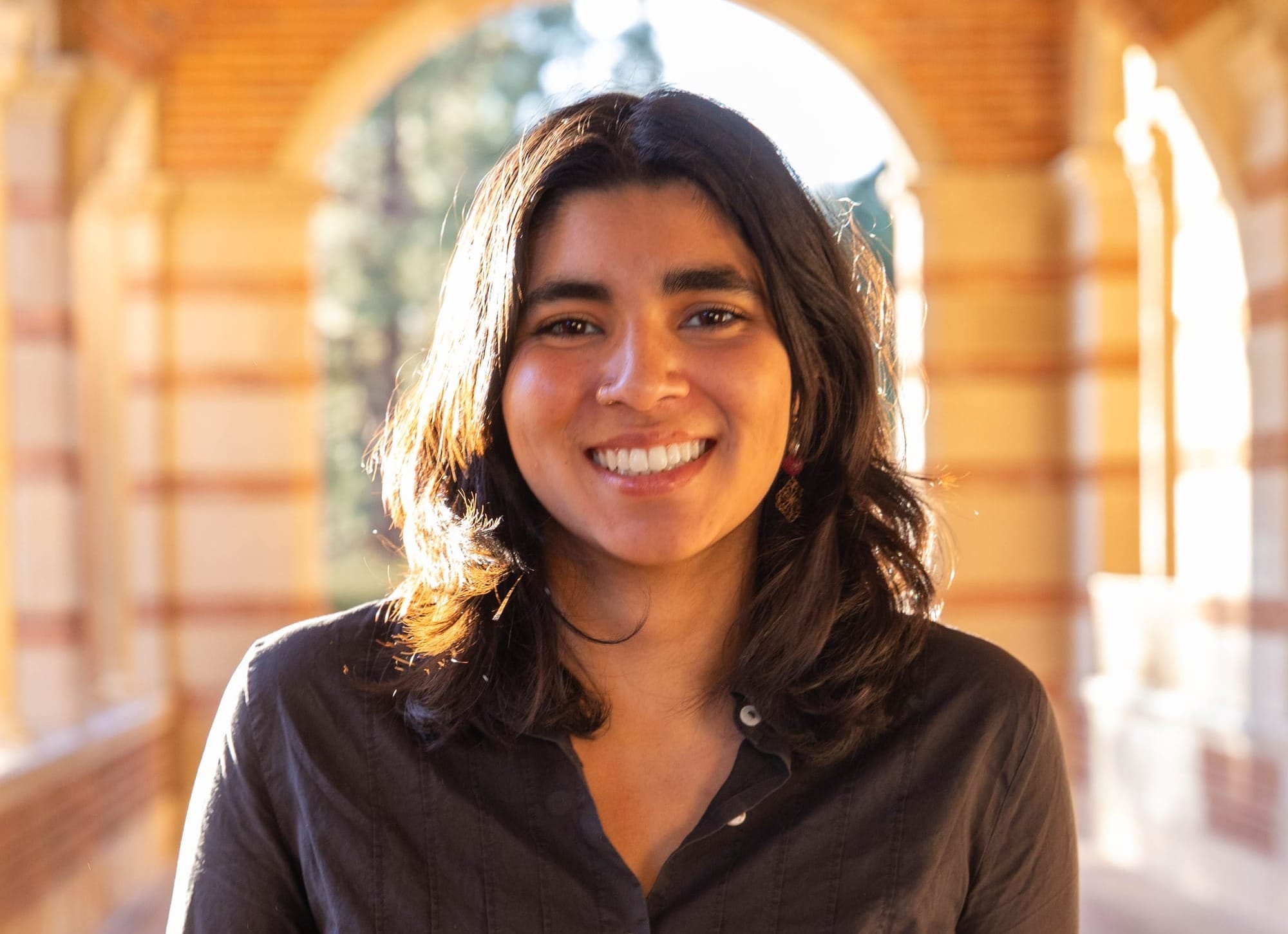
Her activism originated from the environment in which she grew up, though it took time for her awareness about the climate and its impact to deepen. “There were a lot of other things about the environment that I didn't really connect at the time, like how all my friends had asthma,” she said.
For her senior project in high school, Ahsan mapped respiratory hospitalizations across Oakland. The findings were stark. “They broke down really cleanly around neighborhoods, and neighborhoods break down really cleanly around race and economics,” she said. Ahsan was left with no doubt that the climate crisis amplifies inequities. “Oakland, as a poor city, as a city that's mostly people of color, has always been hit hardest.”
At UCLA, Ahsan learned that even affluent neighborhoods aren't immune to disaster. In January 2025, the Palisades Fire killed 12 people and burned over 23,000 acres in Pacific Palisades and Malibu. Intensified by drought and Santa Ana winds, it became the state's third-most destructive wildfire on record. Ahsan was six miles away.
“I didn't feel so much physical terror, even though we could see the flames from campus,” she said. Still, she didn’t want to breathe in the smoke because she worried about the impact on her immune system, weakened by a chronic health condition. She also feared for faculty members who lost their homes to the blaze with little support to recover. “It really felt like just a big shift in the paradigm of the way we talk about wildfires because it hit a big city instead of people in more rural areas being affected.”
Insulated by her wealthy academic institution, Ahsan’s sense of normalcy resumed quickly after the fire, but she hopes the sheer scale of the destruction leads to deeper conversations about climate. She believes a career in clean energy development could help mitigate the crisis, though it’s hard to imagine experiencing the planet as previous generations did. “I've always grown up with this knowledge of the climate crisis as an active issue, so I don't really have anything to compare it to,” Ahsan said.
The drought has been a constant backdrop — but the Drought Monitor's all-clear in 2026 doesn't mean the crisis is over. The designation is cumulative, stemming from one massive water year in 2023 followed by two average ones, Alexandra Biering of the California Farm Bureau explained. "We've had a couple of years that have allowed everything to reset and normalize." The tenuousness comes as no shock to the Drought Generation, for whom the next catastrophe is always just a dry season away.
Growing up, Ahsan heard her mother, an avid gardener, comment on how plants no longer grow as they should and how seasons are shorter. For Ahsan, bizarre weather is normal.
“A lot of times we'll have an atmospheric river that just completely drowns everything, and then we'll have really, really unseasonably hot days,” she said.
The main difference between her and older generations, Ahsan said, is their perception of the planet's future. They still believe it's possible to "turn the car around," to reverse the damage, while her peers shape their lives around the crisis — fighting for stronger laws or pondering how to spend their lives in a world in decline.
Young people are asking: “How do we adapt?” she said. “How can we prepare our communities to be resilient?”
Legacy — not loss — shapes Olivia Chase's relationship with fire. The 22-year-old grew up in Salt Lake City but spent summers in the Northern California river valleys where her relatives in the Hoopa Valley Tribe live. As a teen, she grew concerned about the environment, an awakening that pushed her toward Indigenous practices.
“I was in high school when the wildfire crisis took off in a new direction,” she recalled. “I just remember hearing all the news coming out that this is the worst fire year on record in California. And I was just really terrified that my family and the land that I care so much about was in danger of burning down.”
Chase, now a senior at California State Polytechnic University, Humboldt, had a visceral response: recurring nightmares. She would dream of fire approaching her home, leaving her minutes to grab belongings. Footage on social media fueled her anxiety, as did family experiences. A cousin once had to hose down her home to prevent it from catching fire as a blaze drew near.
Having to spray down one’s home or risk losing it to an encroaching fire is a reality Chase struggles to comprehend. But more broadly the college student worries about climate change’s impact on her tribe’s way of life and ancestral lands along the Trinity River.
“Our river’s flow is not where it used to be,” she said. “Salmon — they need that cold water, and when the water is too low, it's not cold enough. So that's a major concern in terms of drought.”
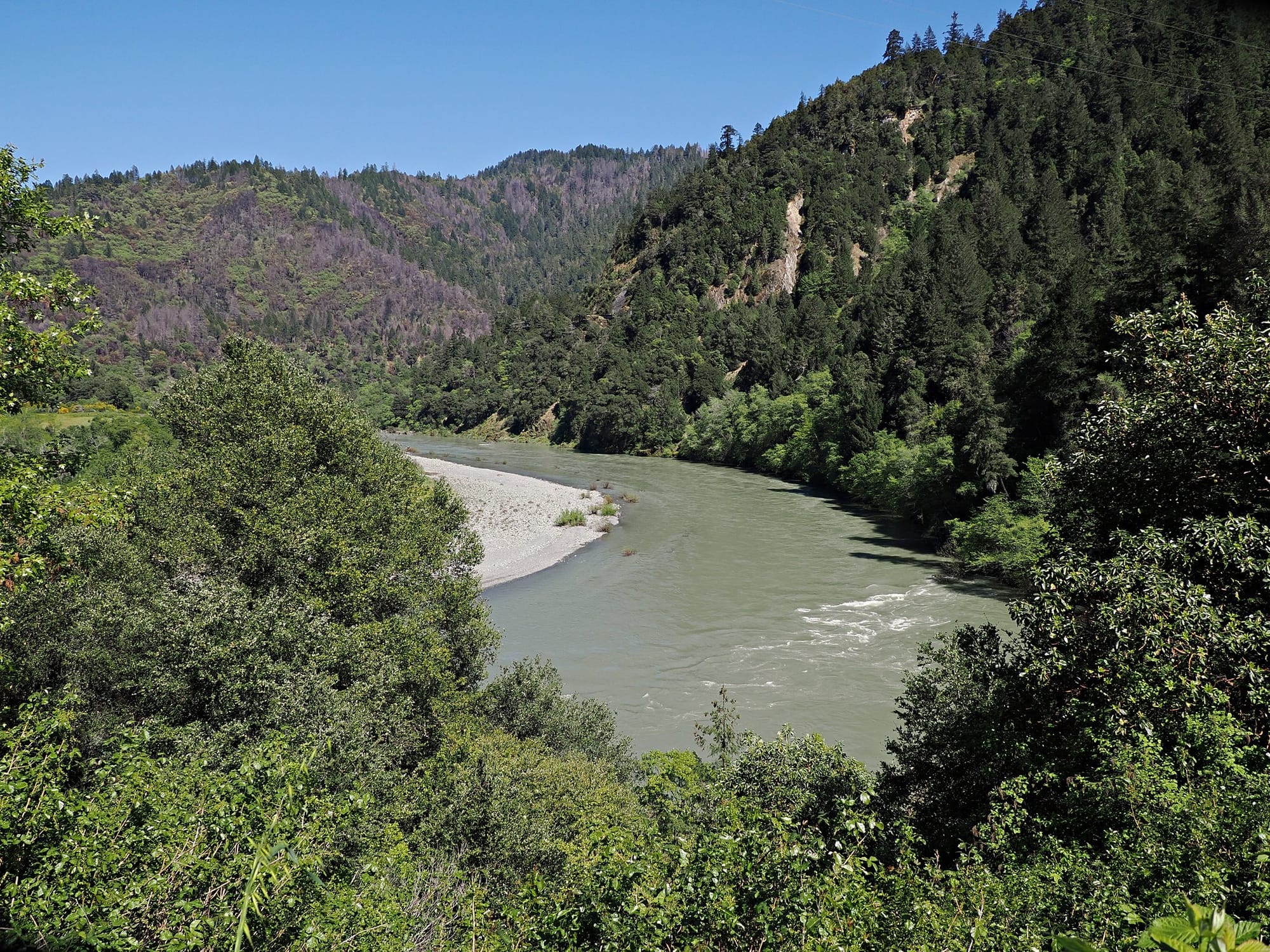
The water tension plays out across the state’s radically different climates. Southern California has been "on a water diet for 40 years, 50 years," having decreased per capita use even as its population boomed, Biering said. In water-rich regions like the North Coast, conservation was barely a thought. But for Chase's tribe, even the river valleys are no refuge. “Our water still gets diverted and sent down to the Central Valley for agriculture," she said. "So we are impacted a lot by that.”
Attending college near her tribe led Chase to seek traditional responses to drought. Tribes statewide, including the Hoopa Valley, have for millennia used “cultural burning” as land stewardship. Her tribe doesn't see fire as negative, aware that huge conflagrations can be avoided with intentional burns. In Hoopa culture, women have played specific roles in this practice.
"Women in our tribe burned to maintain the vegetation so it didn't build up to the point of catastrophic wildfire," Chase said. Burning also maintains access to materials for basket-weaving. Hazel and willow, for example, produce straighter, sturdier shoots after a burn. Intentional blazes also promote oak groves for acorns, a food source for her tribe.
“Fire has always been here,” Chase said. “It's just that with climate change happening, and also preventing Native people from burning the way that we have for thousands of years by removing them from their lands, there's no one there to burn the vegetation back. So it's just getting worse and worse, and drought is a huge contributor to that problem.”
At Humboldt, Chase initially majored in fire science, but felt like an outsider in a male-dominated field. It lacked the spiritual responsibility, community and plant knowledge her tradition held central.
So Chase launched the Cultural Fire Club, centering Indigenous leadership with funding from the Brave Heart Fellowship, a program by the Center for Native American Youth focused on environmental justice. The money allowed her to stock expensive protective gear — $300 boots — and loan it to Indigenous people who couldn't otherwise afford to join burns.
Chase is now majoring in environmental science with a focus on ecological restoration. Such majors are on the rise — up 24 percent annually since 2016, driven by students' interest in addressing climate change. At Humboldt, Chase has developed strong opinions on how cultural burns differ from prescribed ones. The latter, she said, are very structured, organized by agencies such as the U.S. Forest Service or Cal Fire and typically have one person in charge.
“On the other hand, I don't think you can really define what a cultural burn is,” Chase continued. “I've been on cultural burns that do look a lot like a prescribed burn, but I've been on cultural burns where nobody has any protective equipment on, and they're burning with pitch sticks. A cultural burn is more like a sovereign act. It's up to the Native people how they want to do that and what's best for their needs.”
Chase plans to attend graduate school and pursue a career in restoration ecology to heal landscapes and build climate resilience. But she’s aware that her tribal grounds have already changed. Older Hoopa Valley members have told her they used to see grass, prairie and oak in these lands. Some recall that elk would make their way through. Today, Douglas fir trees have overtaken the oaks. Chase likens them to “a bunch of little straws in the land, sucking the water up.”
She knows that the scenery should be different, thanks to the stories her tribal members have passed down for decades. “We have a record of what our landscapes should look like, so even though I’ve never seen them for myself, I know that that's where we want to go.”
The weight of climate change is ever-present. Chase has molded her studies and career around the crisis, and may make personal decisions with it in mind, too. She's unsure about having children — a 2025 study found that roughly 20 percent of young people are afraid to start families amid global warming, rising to 30 percent for those directly impacted by a severe-weather event.
"I'm scared for myself and my family and the people around me," Chase said. "I don't know how I could bring more people into that mix. What are the next 10 years going to look like? I don't really know, and a lot of that has to do with my climate change anxiety."
For Azul Bay, 18, and Sofia Medina, 15, the climate crisis is measured in inhalers and evacuation routes. They attend high school just miles from the Mexico border in neighboring San Diego County communities — National City, an industrial hub, and Chula Vista, a suburb full of fire-prone canyons.
When the Border 2 Fire erupted near San Diego on January 23, 2025, the teens knew the threat was real. It burned 6,625 acres.
The announcement over the loudspeaker at Hilltop High still makes Medina shudder. It instructed faculty and staff who lived in the community of Bonita, directly imperiled, to leave at once to guard their homes.
"I remember the sheer fear," she said. "To drive home wondering whether my home would still be standing was really scary."
Sleep offered no respite, as Medina didn't know if she'd have to flee in the night. The next morning, the terror continued.
"The sky was orange instead of normal blue, and ash was falling like rain," she said. "Everybody was really shaken."
Bay, a senior at Sweetwater High, recalled clouds of smoke "slicing the sky in half." She feared for her health and that of her classmates, teachers and the elderly. She wondered if it was safe to be on campus — then ash showered her during soccer practice.
That Bay plays sports at all stands out to Medina, who has friends who need inhalers to participate — or skip athletics entirely — as more wildfires strike and air quality suffers.
"I find that really sad," Medina said. "Everybody deserves that natural human right of being able to breathe."
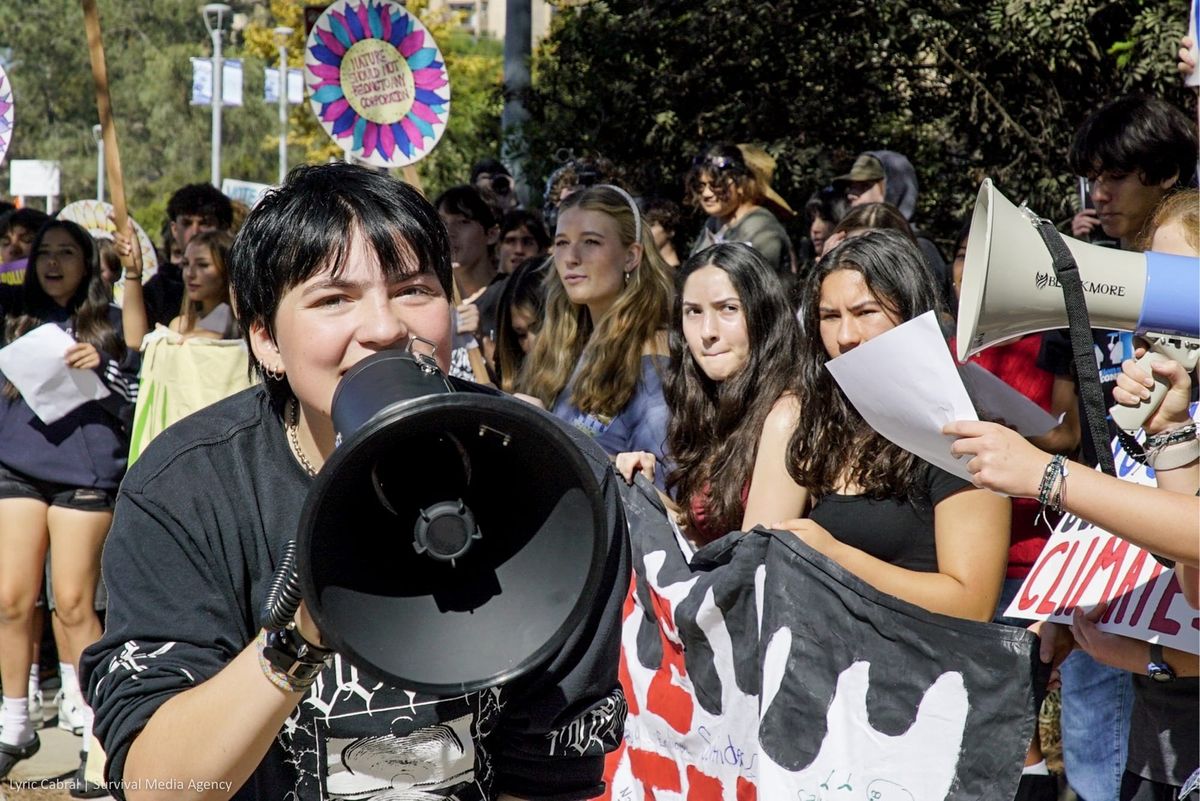
Their concerns have mobilized both young women. They are active in SanDiego350, a nonprofit that advocates for climate justice. In October, they joined statewide school walkouts for the "Make Polluters Pay" campaign, backing the Climate Superfund Act, which would require oil and gas companies to pay for environmental disasters. New York and Vermont have already passed similar legislation.
In California, such a fund could raise "tens or even hundreds of billions of dollars over the next two decades," said Isabel Penman, an organizer for Food & Water Watch who helped coordinate the walkout of 2,000 students from over 50 schools. The money could retrofit schools with ventilation and provide clean drinking water for the over 1 million Californians who lack it.
"It was really inspiring to see young people who've grown up their entire lives in a drought-prone state tell politicians we don't want to live in a world with these climate disasters while our scarce resources are given away to polluters," Penman said.
The 25-year-old considers the shift from anxiety to action to be a defining feature of her generation. "Activism helps alleviate climate anxiety because you're part of the change."
The same month as the walkout, Bay successfully campaigned against a biofuel transfer station slated for a neighborhood near an elementary school. She raised concerns about air pollution with the City Council, who paused the project after her testimony.
"The only reason they were willing to establish it in National City was environmental racism," Bay said of the transfer station backers. "They thought no one would speak up."
National City is 63.5 percent Hispanic. Bay said these communities may struggle to fight environmental racism because economic pressures often eclipse climate concerns.
"Hispanic households have different priorities," she said. "They have other needs." But she, Medina and others are working to educate their communities about how asthma, pollution and fire risk are priorities, too.
In January — the month California became drought-free for the first time in 25 years — they delivered a petition to their local assemblyman's office, calling on him to back the Climate Superfund. SanDiego350 activists also sent a letter to the state superintendent outlining how fossil fuel pollution impairs their ability to learn.
For the Drought Generation, climate change carries "a sense of urgency," Bay said. "It's a common misconception that climate change is an adult problem. No, it's something that will fall onto generations and generations after them. So we have to take care of matters now because it's part of our future."
One day, they may find themselves telling their own children what the sky looked like before it turned orange — if they can remember.
This article — produced by The Fault Line, an independent California journalism project — is available to republish for free. For republishing inquiries, please contact us.